June 19, 2026
12 Best Podium Alternatives for Med Spas & Specialty Practices in 2026

The Recura Team
June 19, 2026
The Recura Team

Many medspas and specialty practices using Podium face issues like missed leads, weak after-hours response, unclear pricing, and limited integration. This can lead to lost bookings and revenue. The solution is to use an alternative platform designed specifically for medical aesthetics. It should ensure fast follow-up, full after-hours coverage, and complete automation from inquiry to booking without manual steps.
Here are the top 3 Podium alternatives at a glance:
| # | Platform | Standout Feature |
|---|---|---|
| 1 | Recura AI | AI-powered lead capture & conversion (speed-to-lead and after-hours booking built for med spas). |
| 2 | Birdeye | All-in-one reputation management with reviews, messaging, and AI chat. |
| 3 | NexHealth | Digital scheduling and forms with direct EHR sync and automated review routing. |
Podium offers a wide range of tools like fast lead responses, multi-channel messaging, review automation, and payments in one platform. For many practices, this works well at first.
But problems often show up after setup. Leads get missed due to AI errors, bookings don’t always get confirmed, unexpected charges appear, support can be slow, and cancelling the contract can be difficult.
For med spas, these issues can directly mean lost consultations and revenue. That’s why many start looking for more dependable alternatives that fully automate booking, work 24/7, and have clearer pricing and support. This guide evaluates 12 Podium alternatives built for practices that need more than fast messaging.
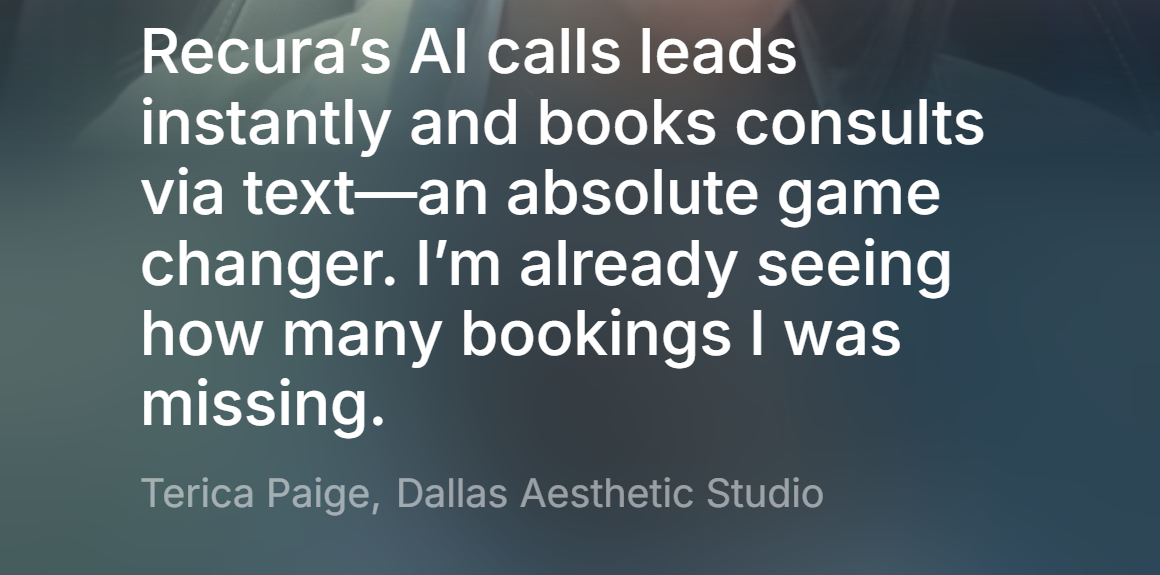
At Recura, we built an AI tool for medical aesthetics and specialty practices. It focuses on fixing frequent revenue leaks like slow lead follow-up, missed after-hours inquiries, and overworked front desks that can’t chase every booking.
Due to that, we don’t just compare feature lists. We look at whether each platform actually solves these real problems for med spas and similar practices. For this list, we reviewed each alternative through demos, official documentation, and user feedback from G2, Capterra, and industry communities, using criteria tailored specifically to medical aesthetics.
Podium is an AI-powered platform that helps local service businesses and med spas respond to leads quickly and convert them into customers. It focuses on “speed-to-lead,” meaning the faster a business replies to an inquiry, the more likely it is to win the customer.
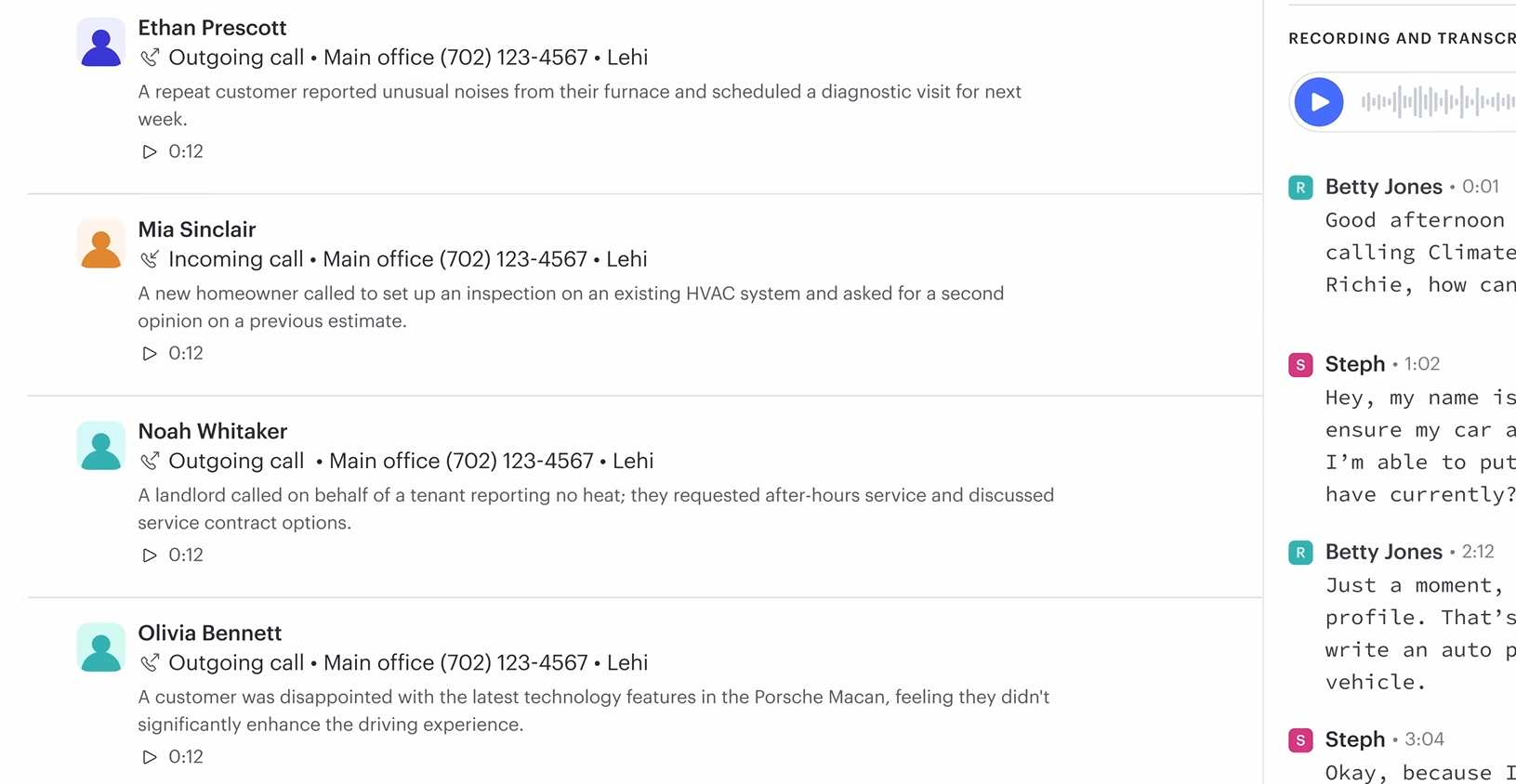
Podium’s main feature is an AI assistant called Avery, which automatically replies to leads from phone, text, web chat, and social media within minutes, 24/7. It can talk to potential customers, qualify them, and even book appointments based on set workflows.
Podium also includes tools for managing online reviews, sending automated follow-up messages, and collecting payments through text links.
Podium delivers good speed-to-lead functionality. But a consistent pattern of complaints across G2, Capterra, and Software Advice reveals deeper problems that push practices to look elsewhere. Here are the five most frequent complaints that users made about Podium:
Podium delivers good speed-to-lead functionality. But a consistent pattern of complaints across G2, Capterra, and Software Advice reveals deeper problems that push practices to look elsewhere. Here are the five most frequent complaints that users made about Podium:
Podium’s sales process is often smooth and persuasive, but many users say the post-sale experience doesn’t match expectations. Customers report that some promised features and support don’t fully work after signing, leaving them to figure things out on their own.
One Capterra reviewer said they spent over 100 hours fixing setup issues due to poor support.
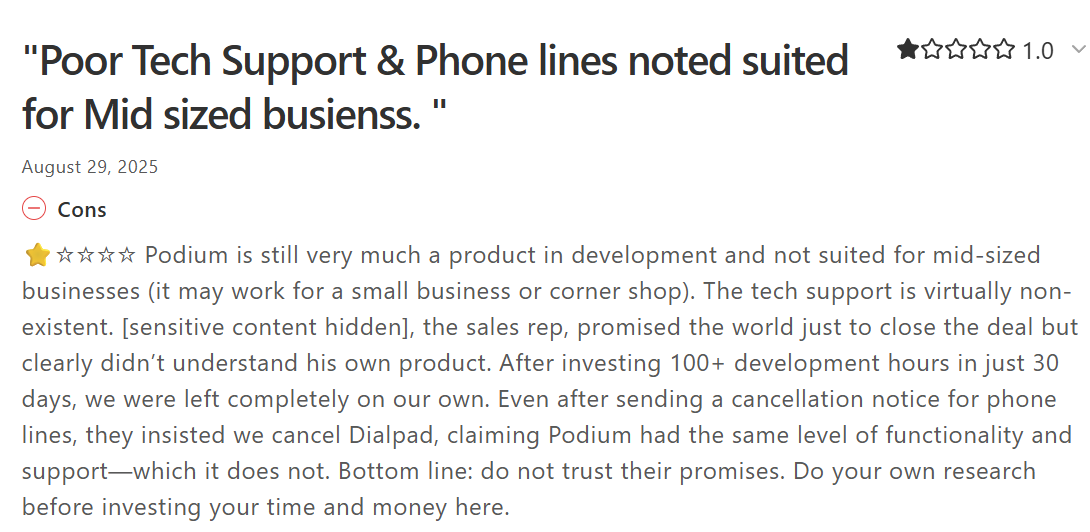
Another reviewer on G2 mentioned problems like unreliable messaging, weak call tracking, and slow, unhelpful customer service. For med spas, poor onboarding can mean lost time and missed revenue right when the system is supposed to be working.
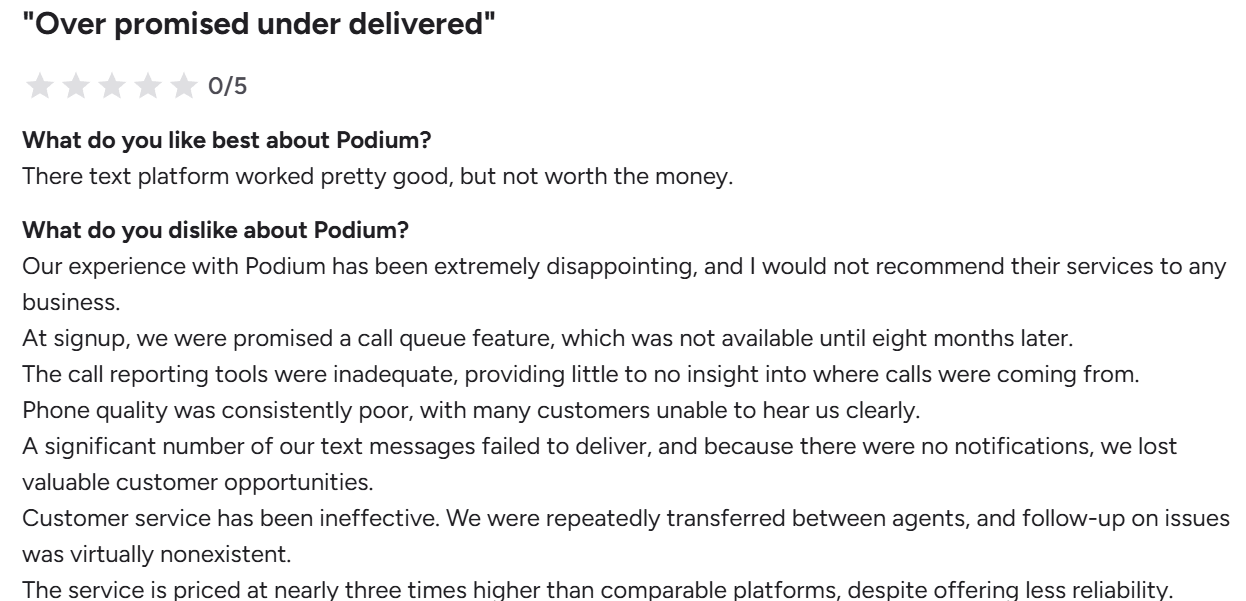
Podium doesn’t list clear pricing online, so businesses must get a sales quote. Many users on G2 say the final cost often ends up higher than expected after add-ons like extra users, compliance fees, and other features are included.
Reviews also say pricing can feel expensive and not very transparent, especially for smaller practices. Some note it costs more than similar tools while offering less dependability. For budget-conscious practices, this lack of clarity and rising costs can be a major issue.

Podium’s AI employee is a core feature, but users say it isn’t always as accurate as expected. One user on Capterra reports errors in transcripts, incorrect replies, and customers quickly realizing they’re speaking to an AI.

Others mention that the AI sometimes gives wrong or irrelevant answers, requiring staff to step in and fix issues. For med spas, this can negatively affect the first patient interaction and reduce the effectiveness of automated communication.
Podium responds to leads quickly, but turning them into booked appointments often still requires manual follow-up since it doesn’t fully integrate with all scheduling systems.
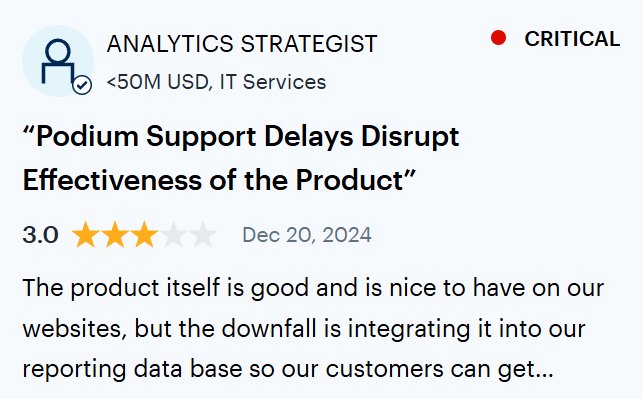
A Gartner Peer Insights reviewer reports integration issues with older tools and reporting systems, and certain features only work on higher-tier plans. For med spas, these gaps between inquiry and booking can lead to missed conversions, especially after hours.
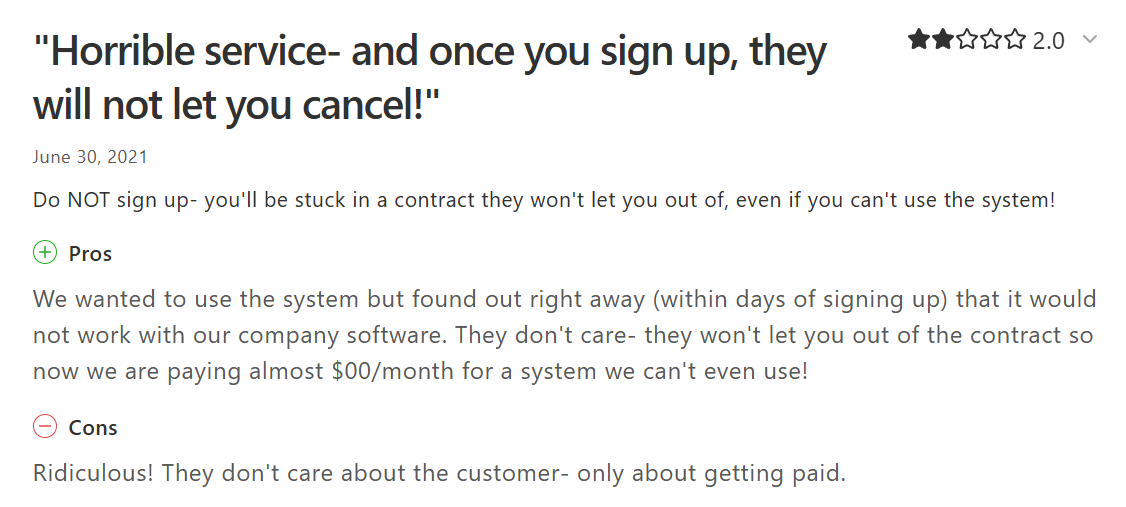
Many users say canceling Podium can be difficult, with reports of delays, continued billing, and auto-renewal issues. Some reviewers on Capterra mention being charged after canceling, disputes over old contracts, and long delays in releasing phone numbers.
The following is a short comparison of the top 12 Podium alternatives, explained in the latter section:
| # | Platform | Type | Key Differentiator |
|---|---|---|---|
| 1 | Recura AI | AI automation & booking platform, integrates with ERM or scheduling software for medspas and aesthetics | Fully automates lead-to-booking process 24/7 for med spas |
| 2 | Weave | Communication & payments platform | All-in-one messaging, phones, scheduling, and payments for healthcare |
| 3 | Birdeye | Reputation & customer experience platform | Strong focus on reviews, listings, and multi-location reputation management |
| 4 | NexHealth | Healthcare operations platform | Full clinical operations, compliance, and patient journey management |
| 5 | Swell | Reputation management platform | Automates review generation and patient feedback for clinics |
| 6 | Aesthetix CRM | Med spa CRM & marketing platform | Lead nurturing + pipeline automation tailored to aesthetic workflows |
| 7 | Meevo | Spa & salon management system | End-to-end operations: scheduling, CRM, inventory, and payments |
| 8 | Vagaro | All-in-one spa management platform | Combines booking, CRM, POS, and marketing in one system |
| 9 | PatientPop | Patient acquisition platform | Focus on SEO, online visibility, and patient growth funnels |
| 10 | Spruce Health | Healthcare communication platform | HIPAA-compliant secure messaging and telehealth communication |
| 11 | Growthware | AI business growth platform | Unified system for marketing, scheduling, and AI-driven growth insights |
| 12 | Jane App | EMR & practice management platform | Strong clinical tools: charting, billing, scheduling, and EMR workflows |
Here are the top 12 Podium alternatives reviewed in detail, including their core features, pros, and cons:
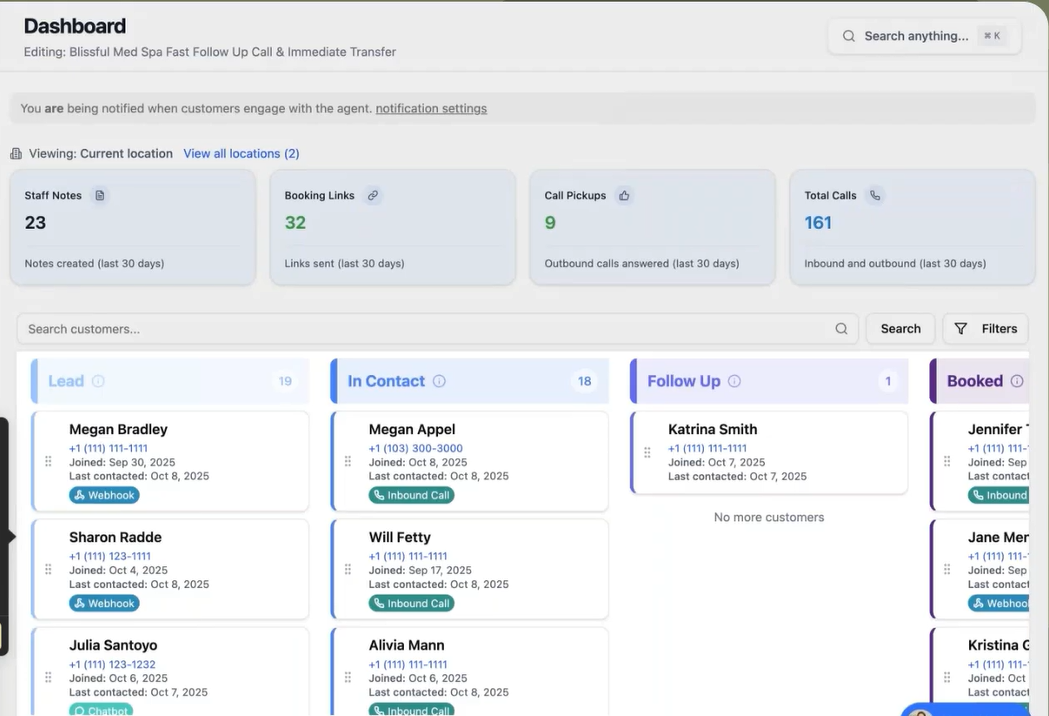
Recura AI is an automation and revenue platform built for med spas and specialty clinics. It works as a 24/7 AI receptionist that instantly answers calls, texts, and web chats, helping practices capture more bookings without extra staff.
It connects directly with a clinic’s EMR or scheduling system, allowing it to book, reschedule, or cancel appointments automatically. Designed for single-provider and growing clinics, it focuses on reducing missed calls, slow responses, and lost after-hours leads.
What makes Recura different is that it doesn’t just reply to messages. But it turns them into confirmed appointments. Every inquiry is handled within 30 seconds, 24/7, and fully converted from first contact to booking without human involvement.
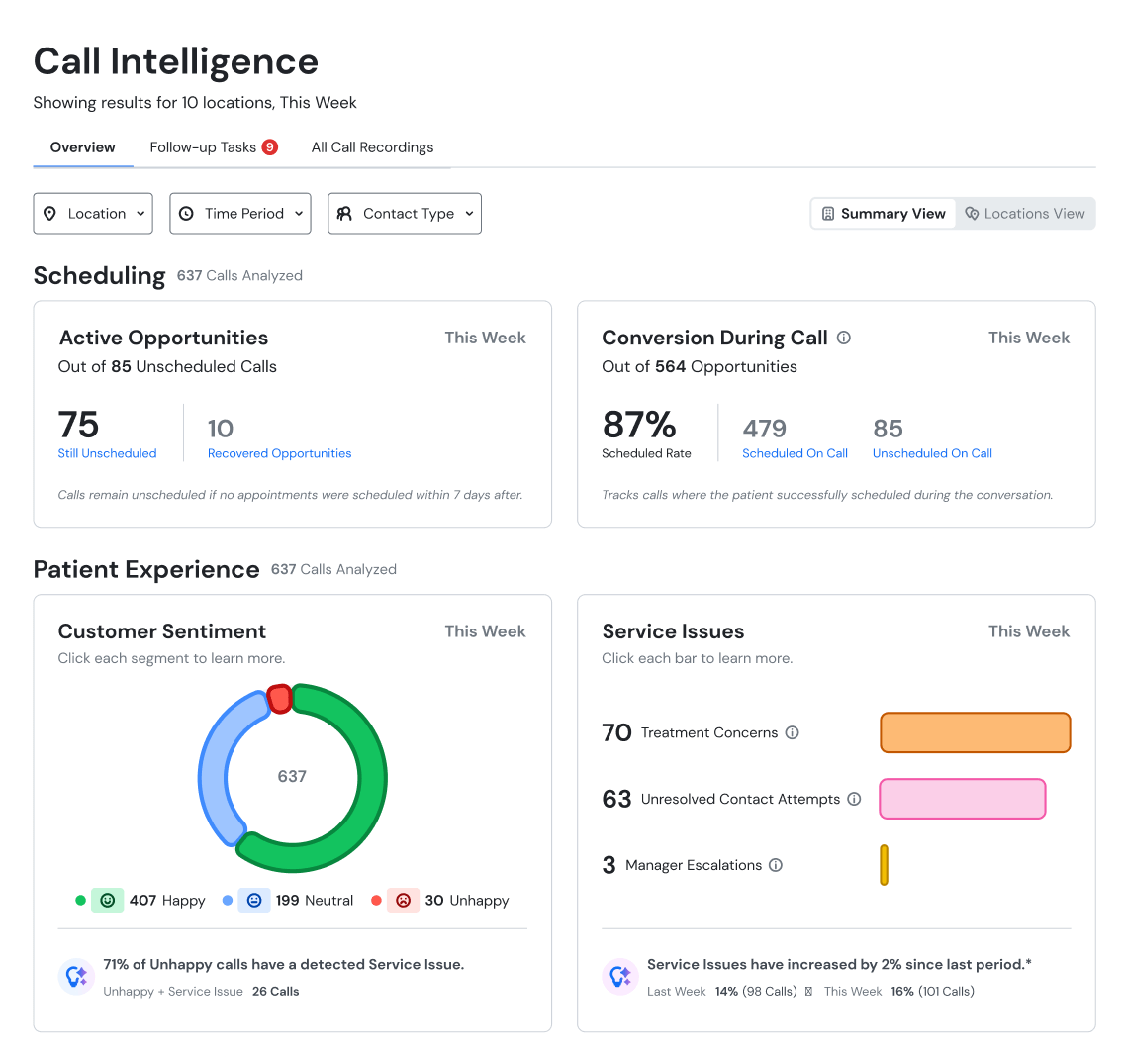
Weave is a customer communication and payments platform designed for healthcare practices (like dental and medical clinics). It’s suited for small to mid-sized businesses that want to manage calls, texts, scheduling, and payments in one unified system rather than using multiple tools.
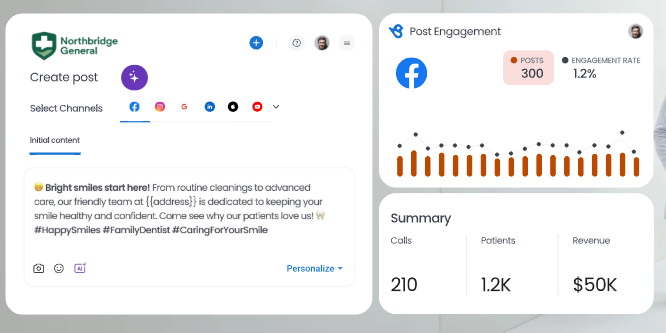
Birdeye is a reputation management and customer experience platform designed for businesses that want to improve their online presence, reviews, and customer engagement. It’s suited for small-to-medium and multi-location businesses (like clinics, restaurants, and service providers) that need to manage reviews, listings, and customer interactions at scale.
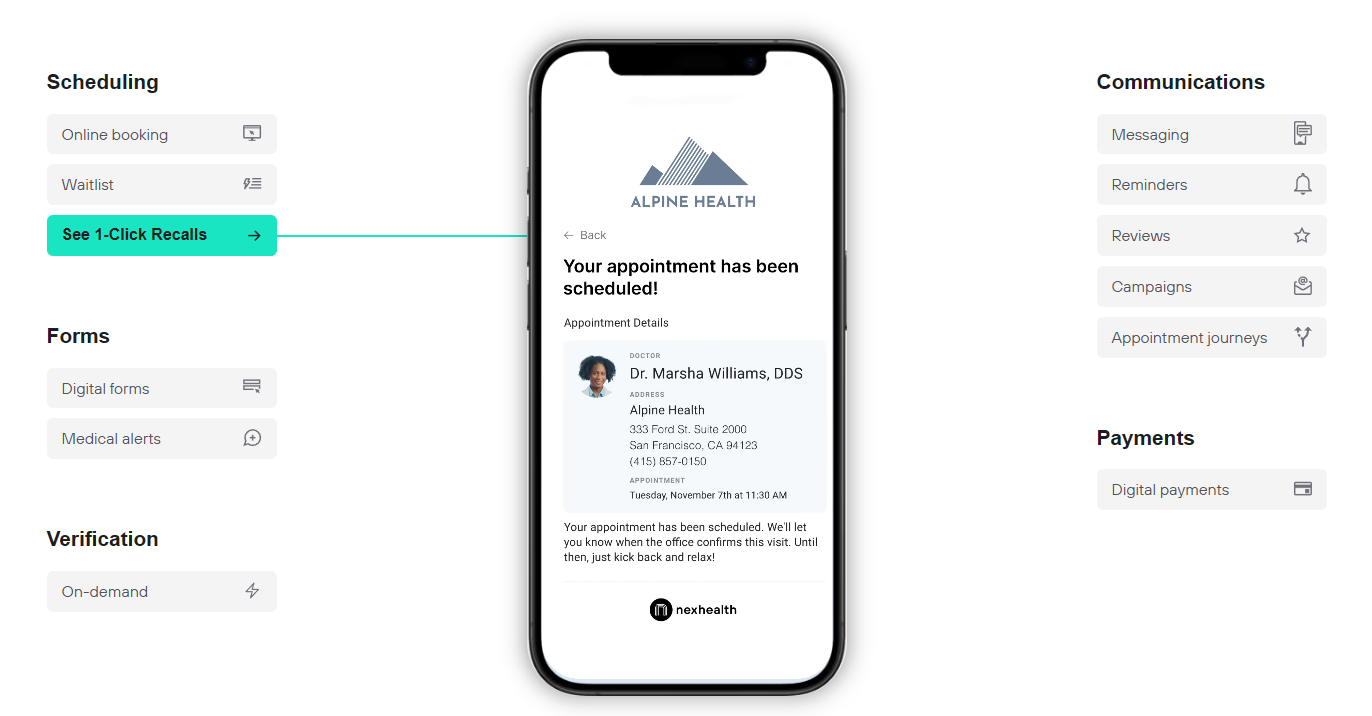
NexHealth is a healthcare operations and patient management platform built for hospitals, clinics, and regulated healthcare environments. It’s suited for organizations that need deep operational control, compliance, and end-to-end patient journey management.

Swell is a healthcare-focused reputation management and patient experience platform built for multi-location practices like med spas, dental clinics, dermatology offices, and specialty healthcare groups. It helps automate review generation, patient feedback collection, and messaging workflows through SMS and integrations with practice management systems.
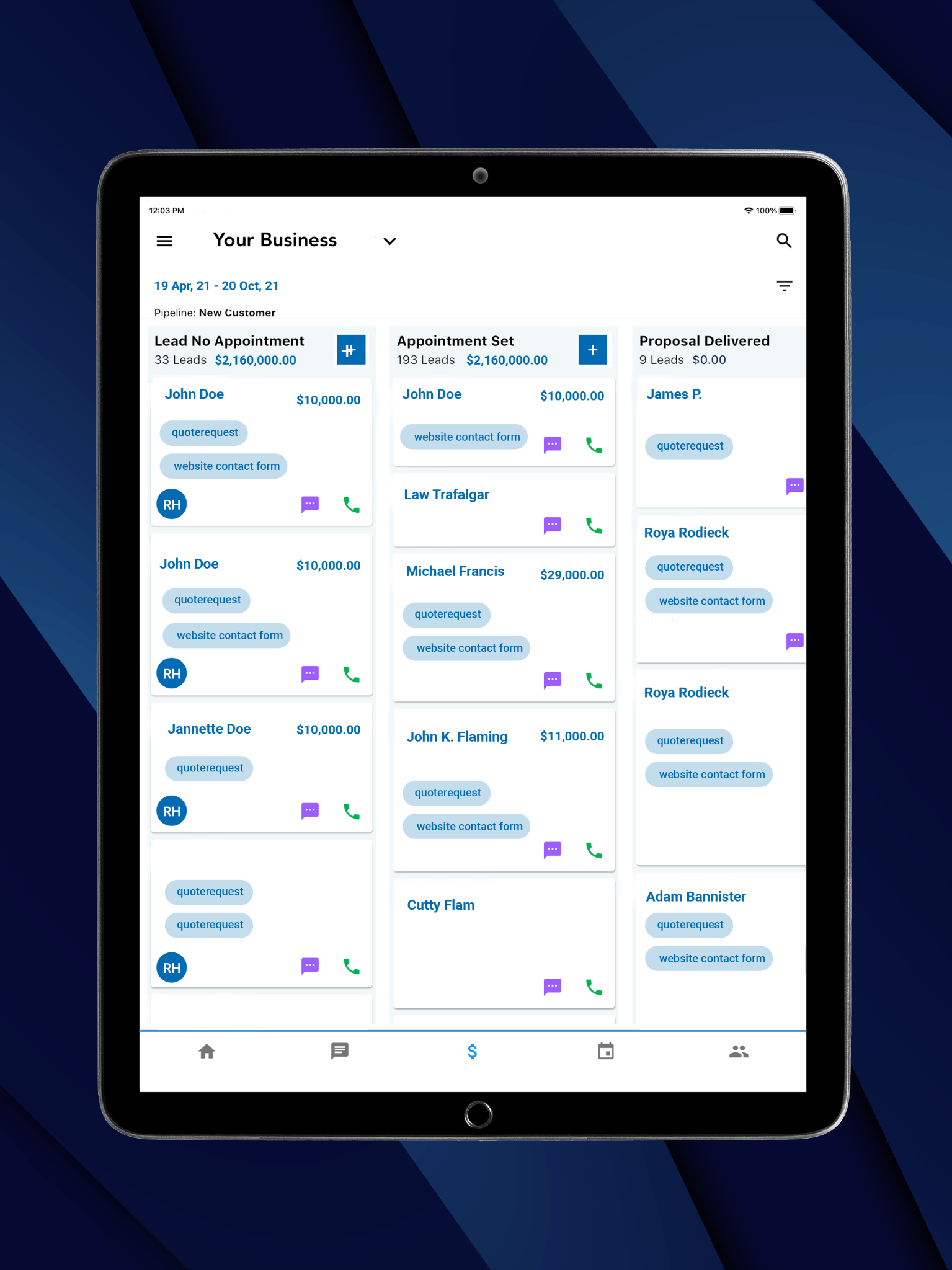
Aesthetix CRM is an all-in-one med spa and aesthetic practice CRM and marketing automation platform built for plastic surgery clinics, med spas, and cosmetic practices. It helps practices manage leads, automate follow-ups, run SMS/email campaigns, and convert inquiries into booked consultations from a single system.
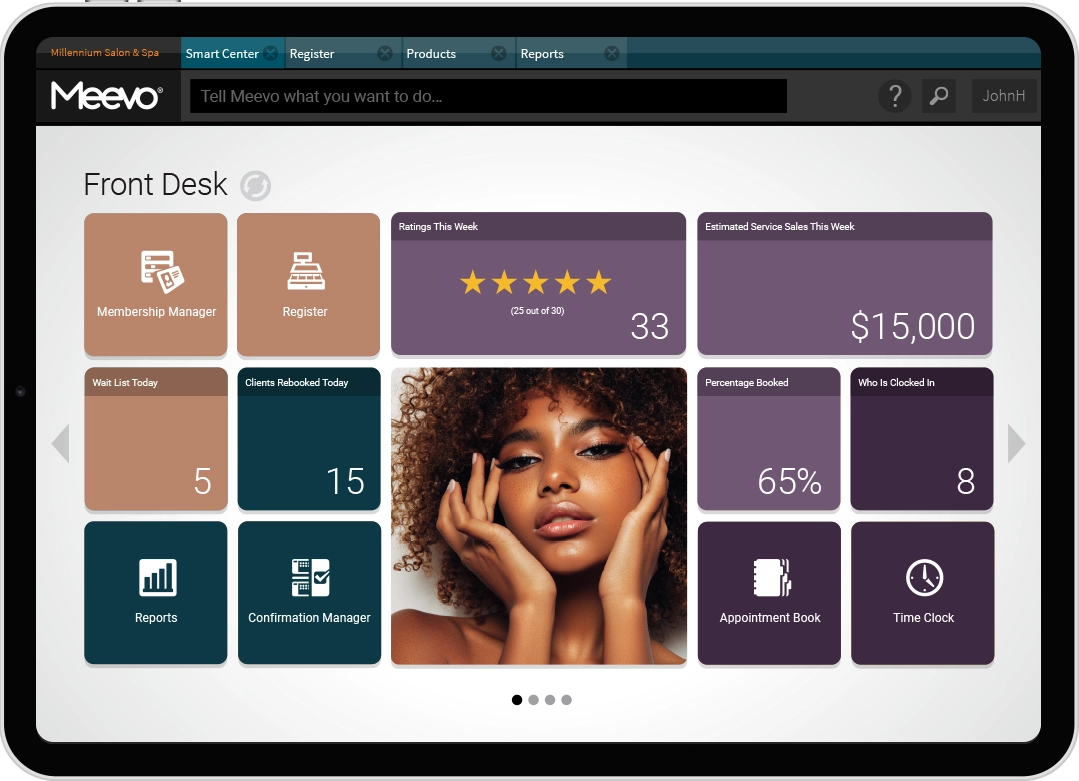
Meevo is an all-in-one salon, spa, and med spa management platform designed to handle scheduling, client management, marketing, inventory, and payments in a single system. It is used by med spas, dermatology clinics, and aesthetic practices that need operational control beyond just messaging or review tools.
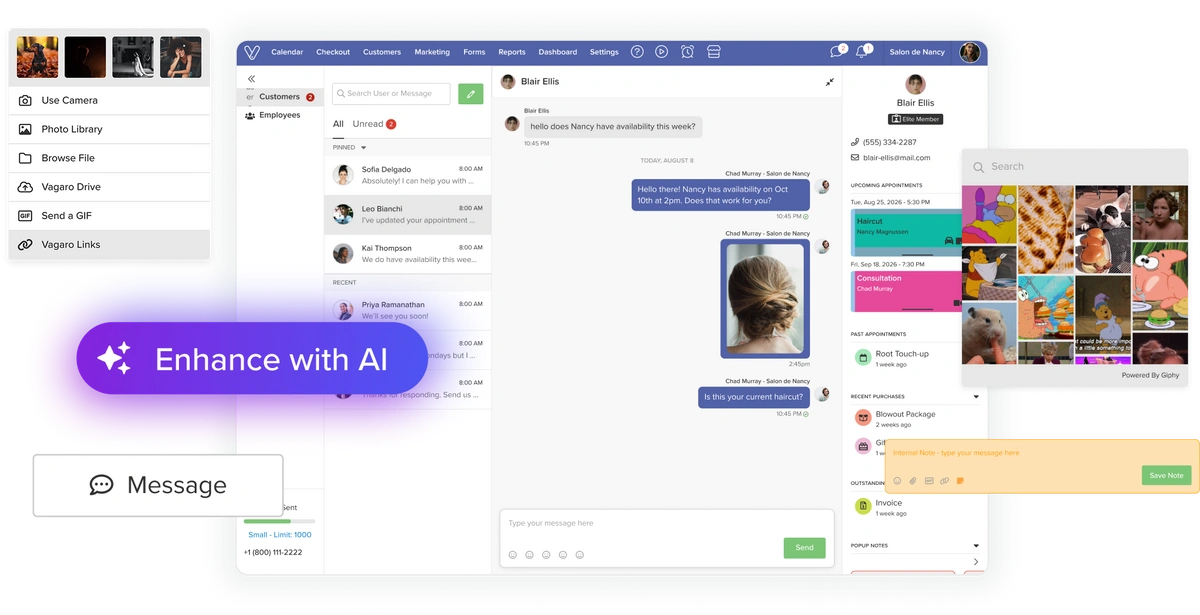
Vagaro is an all-in-one practice management platform for salons, spas, and med spas that combines scheduling, CRM, POS, marketing, and basic EMR tools in a single system. It’s used by med spas because it manages both front-desk operations and client communication workflows in one place.
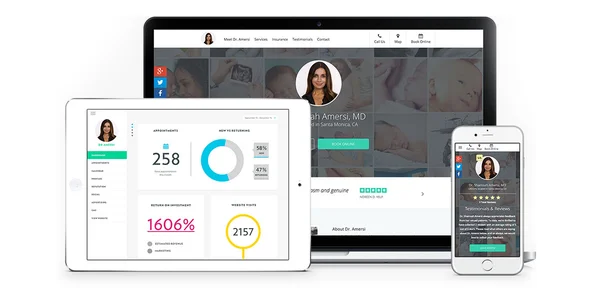
PatientPop is an all-in-one practice growth and patient acquisition platform designed for healthcare providers such as med spas, dermatology clinics, dental practices, and specialty medical offices. It combines marketing, online visibility (SEO), appointment scheduling, reputation management, and patient engagement tools into a single system.
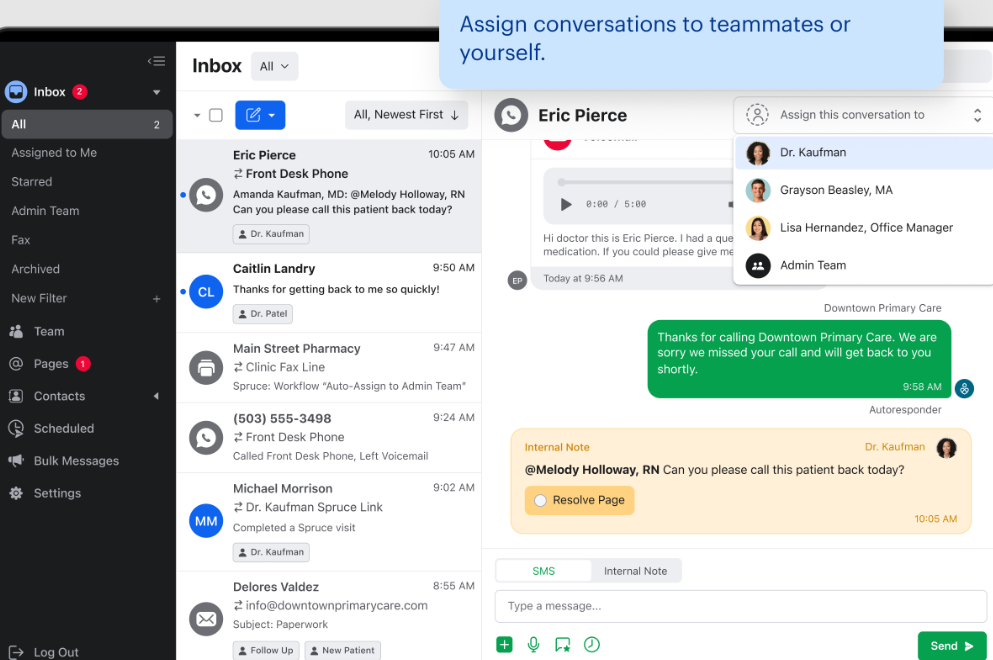
Spruce Health is a HIPAA-compliant healthcare communication platform built for clinics, medical practices, and specialty providers to manage patient communication in one secure system. It combines texting, calling, video visits, and secure messaging into a unified clinical inbox for practices that need fast, compliant patient interaction.
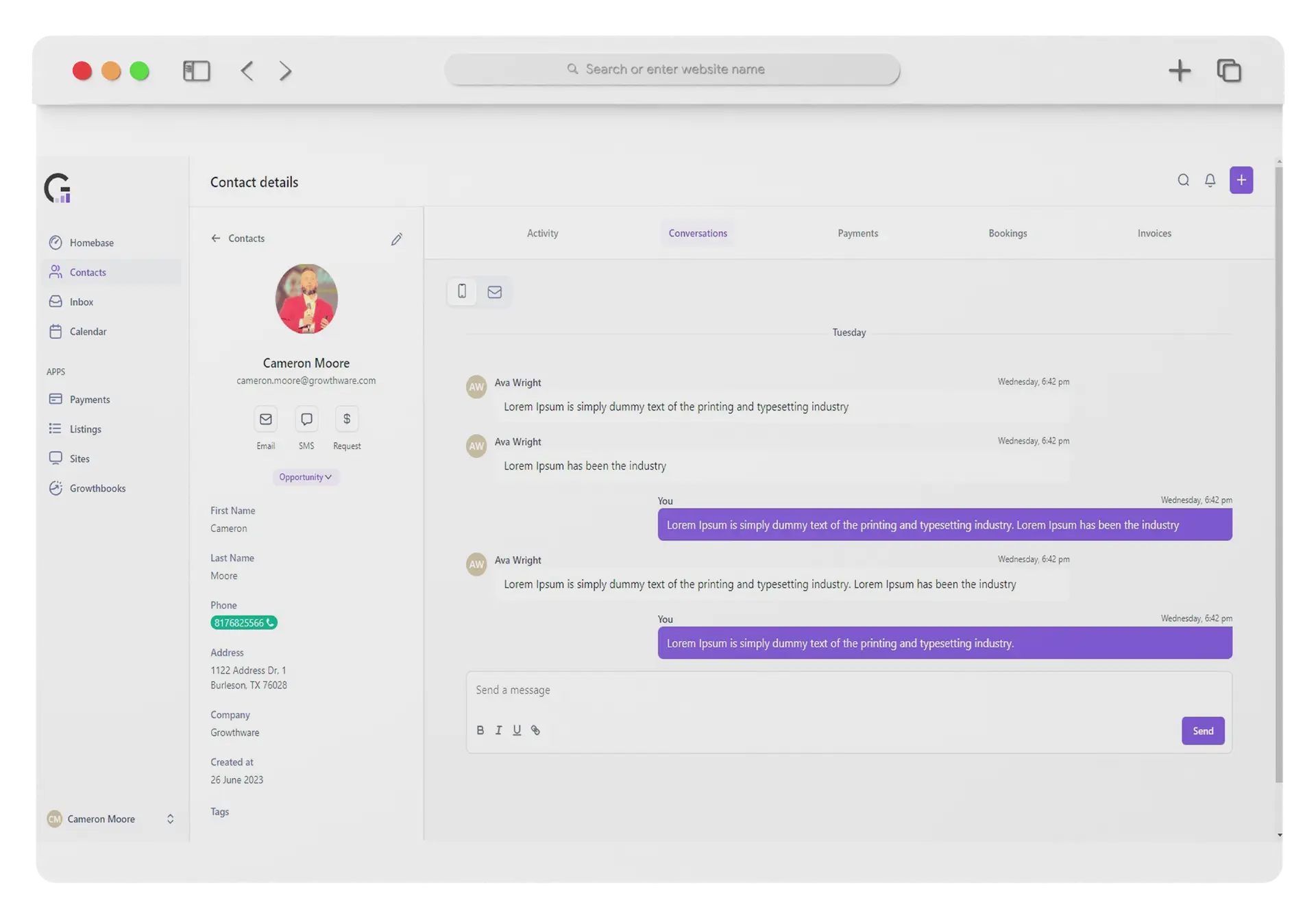
Growthware is an AI-driven small business growth platform designed to unify marketing, sales, scheduling, messaging, listings, and customer management into a single system. It focuses on helping local service businesses, including healthcare, med spas, and specialty practices, use data-driven workflows and automation to increase revenue and streamline operations.
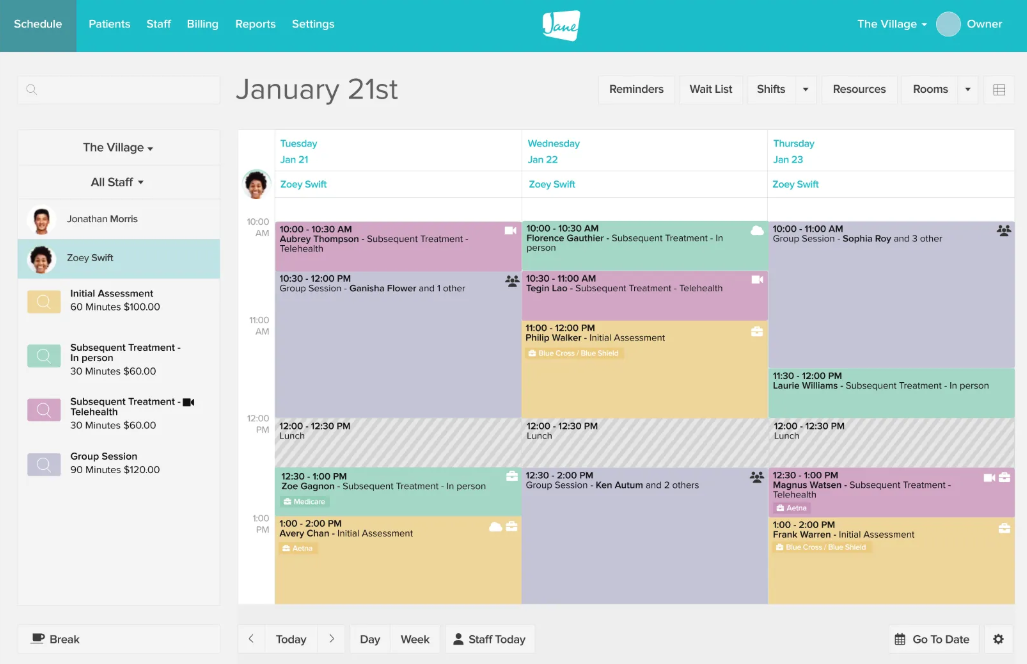
Jane App is a cloud-based practice management and EMR platform designed for health and wellness clinics, including physiotherapy, dermatology, chiropractic, mental health, and med spa practices. It combines online booking, charting, scheduling, billing, telehealth, and client communication into a single system.
Not all Podium alternatives focus on the same things. Some are better for reviews, others for scheduling or lead handling. To make this list useful for med spas and specialty practices, we judged each tool based on six areas where Podium is known to fall short:
Switching platforms is a big decision. Choosing the wrong Podium alternative can lead to more onboarding, staff disruption, and continued lost revenue. Thus, before comparing features, use this framework to identify what your practice really needs:
Podium offers many tools like messaging, AI responses, reviews, and payments in one place. But many practices face issues with AI accuracy, booking gaps, unclear pricing, and weak support, which can lead to lost revenue.
That’s why many users look for better Podium alternatives. A better solution should not just reply to leads but fully automate booking, work 24/7, and remove manual follow-ups. Recura AI does all that. It’s built for med spas and handles the entire process from inquiry to confirmed appointment automatically.
If Podium isn’t working for you, it may be time to switch. Book a demo with Recura AI and start converting more leads into appointments.
Most platforms help with data migration, but what they include can vary. Thus, before choosing a Podium alternative, confirm what data they can import, if migration is included or costs extra, and how long it takes. Without a clear plan, switching can lead to gaps in patient data and communication history.
It depends on the platform. Large systems can take weeks to set up, while simpler tools are quicker to get started.
If you want less disruption, choose a platform with easy setup, clear onboarding, and real support. Recura is built to run in the background, so your team doesn’t have to manage it daily, making it easier for busy front desks.
Yes, Podium can be HIPAA compliant if used properly. It offers a Business Associate Agreement (BAA), which healthcare providers need. However, compliance also depends on how your staff handles patient data, as signing the BAA alone isn’t enough.
Communication platforms like Podium, Weave, or Klara handle messaging and reminders. Lead conversion platforms go further by qualifying leads and booking appointments automatically.
It depends which part of Podium you are replacing. If the gap is reviews and messaging, several platforms above cover it. If the gap is that inquiries arrive when nobody is free to answer, the replacement is phone coverage rather than another messaging tool, which is a different category and is compared in our guide to what answers your phones when nobody can.
Some do and it is worth separating from review generation, which is the thing Podium is best known for. Ask specifically whether outreach is triggered from your patient records and whether opt-outs are honored automatically.
The real gap is between replying and booking. If your team is busy, messaging tools add more work. Recura closes this gap by turning inquiries into confirmed appointments automatically.
Ask the vendor directly and confirm it in a demo. Don’t rely on vague claims like “we integrate with most systems.” Also, check if the platform actually books appointments in your system in real time or just notifies staff to follow up. Ask which systems are natively supported, and what happens if the integration fails.

Recura answers calls, texts back leads, and books consults, so your calendar fills even overnight.
See a live call flow, tailored to your practice

Recura insights and updates, shared when there’s something worth knowing.


Proudly part of the

family