Quick Summary
HIPAA-compliant answering services protect patient data while keeping your medical aesthetics and specialty practices responsive around the clock. But the best options automatically qualify leads, book appointments, and cover after-hours demand.
Missed Calls Cost Revenue. Non-Compliant Ones Cost More.
Patient calls carry protected health information. This means every missed call that lands with a non-compliant service or a standard voicemail creates both a revenue gap and a compliance risk.
That’s why dependable after-hours and overflow call coverage is crucial for medical practices. However, finding an answering service that not only meets HIPAA standards but also effectively converts patient inquiries into booked appointments can be difficult. The options narrow quickly when both compliance and performance are non-negotiable.
To make the decision easier, this guide shares the 10 best HIPAA-compliant answering services for 2026. It includes a breakdown of their compliance credentials, important features, and what each provider does best.
Why Listen to Us?
Recura works exclusively with medical aesthetics and specialty practices. We’ve built AI-powered communication tools around the specific operational gaps that cost practices revenue, like missed calls, slow follow-up, after-hours demand, and front desk overload. For this list, we evaluated each platform through hands-on demos, documentation review, and user feedback.
What is a HIPAA-Compliant Answering Service
A HIPAA-compliant answering service handles patient calls, texts, and messages while protecting sensitive health information under rules set by the Health Insurance Portability and Accountability Act (HIPAA). Any service that touches protected health information (PHI) is legally required to meet these standards.
But the wrong provider can expose your practice to fines, legal liability, and reputational damage. That means a compliant answering service must cover every requirement on this list:
- Signed Business Associate Agreement (BAA) with the provider.
- End-to-end encryption for all calls, texts, and messages.
- Strict access controls limiting who can view patient data.
- Secure message storage and transmission protocols.
- Staff trained on HIPAA privacy and security rules.
- Audit trails tracking every interaction involving PHI.
- Clear data breach notification procedures.
The Top 10 HIPAA-Compliant Answering Services
Answering services are not all built equal. Some handle calls only, while others cover texts, web chat, and automated follow-up. A few go further and book appointments directly into your scheduling system. Here’s how the top 10 services compare:
| # | Tool | Type | Key Differentiator |
|---|---|---|---|
| 1 | Recura | AI-powered | Books appointments directly in your scheduling system across calls, texts, and web chat |
| 2 | Sequence Health | Human (clinical) | Licensed nurse triage powered by Schmitt-Thompson protocols |
| 3 | OnPage | Internal routing | Secure team messaging with 200+ integrations |
| 4 | GoodCall | AI-powered | Code-free agent customization with assignable skills |
| 5 | AMBS Call Center | Human (live agents) | Bilingual agents with overflow and after-hours coverage |
| 6 | Clementine | Human (live agents) | Smart call diverting with fully customized scripting |
| 7 | Televox | AI-powered | Real-time tone and intent recognition with engagement analytics |
| 8 | Smith.ai | Hybrid (AI + human) | 7,000+ integrations with optional human agent oversight |
| 9 | AnswerFirst | Human (live agents) | Emergency dispatching and escalation protocols |
| 10 | Flatworld Solutions | Human (multi-channel) | Inbound calls, live chat, email, and virtual assistant from one provider |
1. Recura
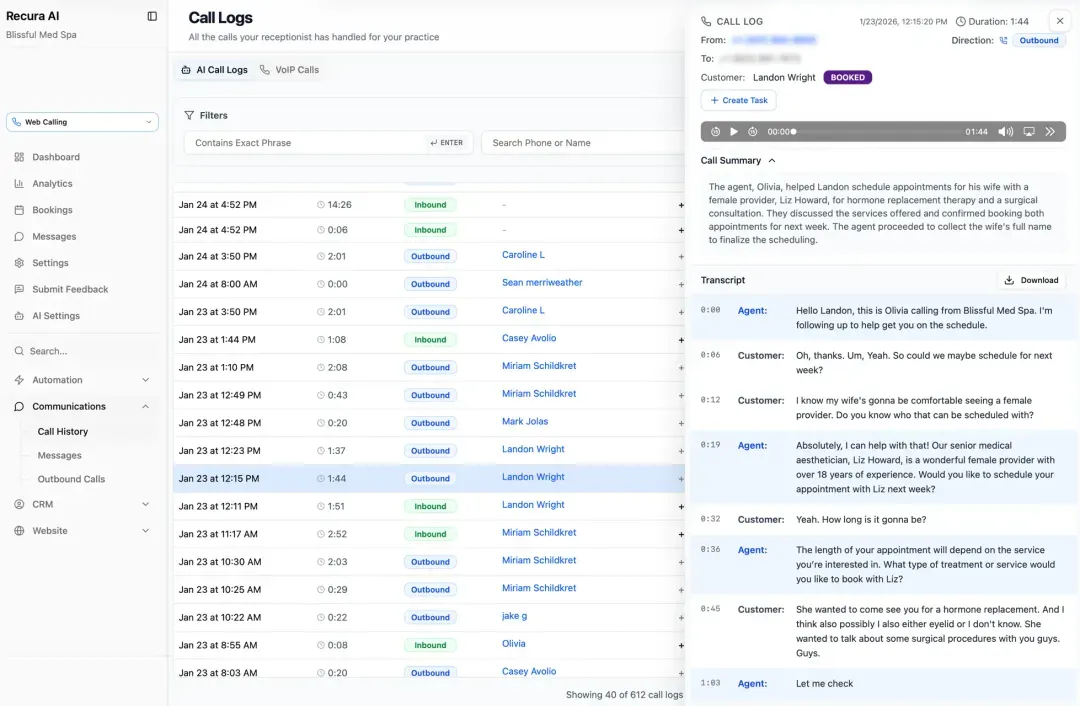
Recura is a HIPAA-compliant AI receptionist built for medical aesthetic and specialty practices. It answers calls, texts, and web chats around the clock, responding to every inquiry in under 30 seconds. When a prospective patient reaches out after hours or during a busy afternoon, they get an immediate, professional response rather than a voicemail.
Recura stands out from other platforms on this list with its post-call follow-up. The platform captures lead information, qualifies the inquiry, and books appointments directly into your scheduling system. Most answering services stop at message-taking or call routing. But Recura handles the full path from first contact to confirmed booking.
Key Features
- Answers calls, texts, and web chats in under 30 seconds at any hour, ensuring no inquiry goes unanswered.
- Books, reschedules, and cancels appointments directly in your scheduling system without staff involvement.
- Configurable response rules based on business hours, staff availability, and call routing preferences.
- Engages website visitors with real-time responses, handles questions, and converts inquiries into booked appointments.
- Follows up with leads who didn't book on first contact, moving them through your pipeline toward conversion.
Pros
- Responds to every inquiry in under 30 seconds, 24/7.
- Books, reschedules, and cancels appointments directly in your scheduling system without staff involvement.
- Covers calls, texts, and web chat in one connected workflow.
- Built specifically for medical aesthetics and specialty practices.
- Centralizes all leads, calls, and conversations in one dashboard.
Cons
- Designed for medical aesthetics and specialty practices, so it may not fit general healthcare or primary care operations.
2. Sequence Health
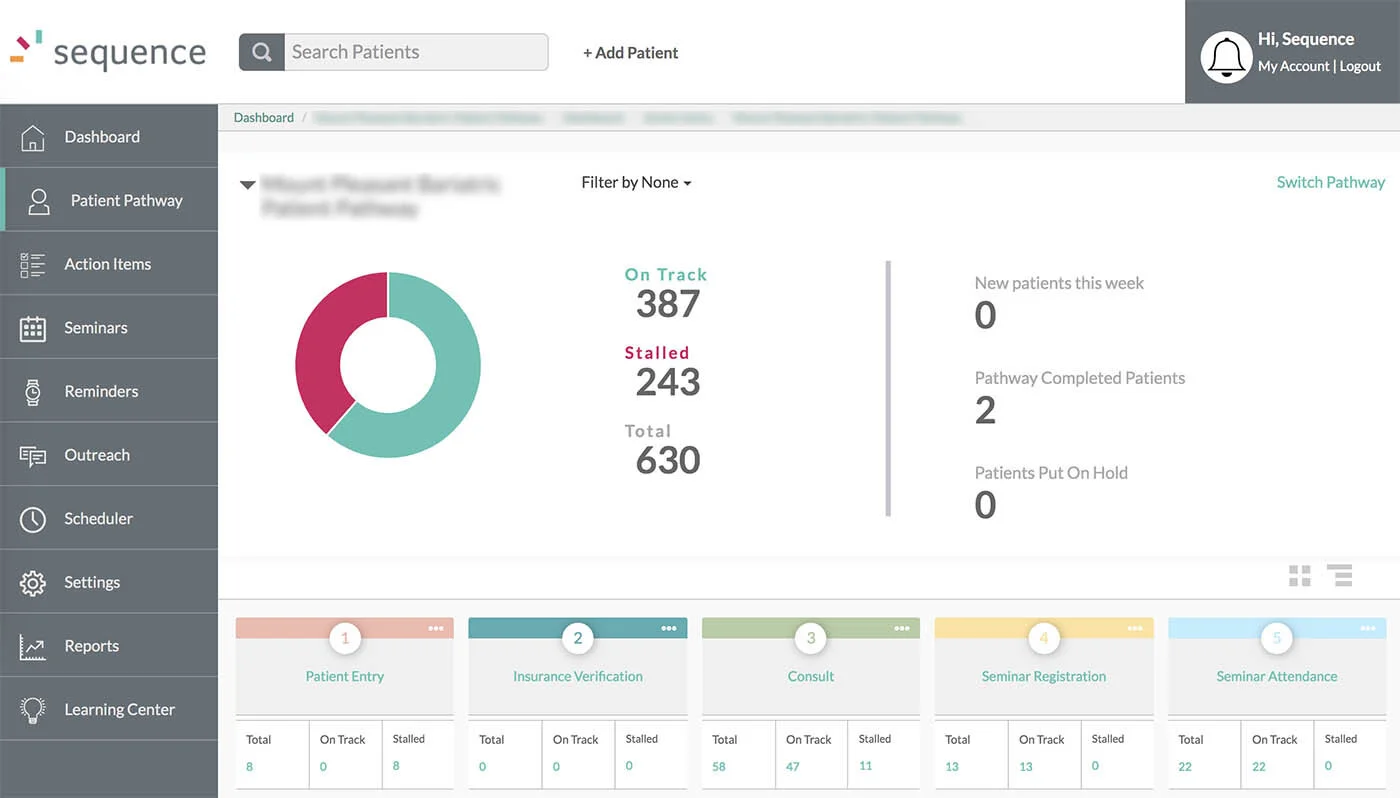
Sequence Health offers over-the-phone nurse triage powered by Schmitt-Thompson clinical protocols. Incoming inquiries are assessed for urgency and routed accordingly, and the platform also coordinates booking, insurance verification, and pre-procedure instructions. Response capacity is tied to staffing levels rather than automation, so it fits practices where clinical complexity requires a licensed professional in the loop.
Key Features
- Licensed RNs assess patient inquiries and provide guidance on next steps based on Schmitt-Thompson clinical protocols.
- Single point of contact for all potential and existing patients to connect with your practice.
- After-hours coverage that keeps your lines staffed and patients attended to when your team is off duty.
Pros
- Licensed nurse triage gives patients clinical guidance that AI-based services can't replicate.
- Intuitive interface that's easy for new users to navigate.
- Handles care coordination beyond just answering calls, including insurance verification and pre-procedure instructions.
Cons
- No public pricing or feature breakdown makes it harder to estimate value before a sales conversation.
- Relies entirely on human agents, so response capacity is limited by staffing availability during high-volume periods.
- Less suited for practices where speed-to-lead automation matters more than clinical triage.
3. OnPage
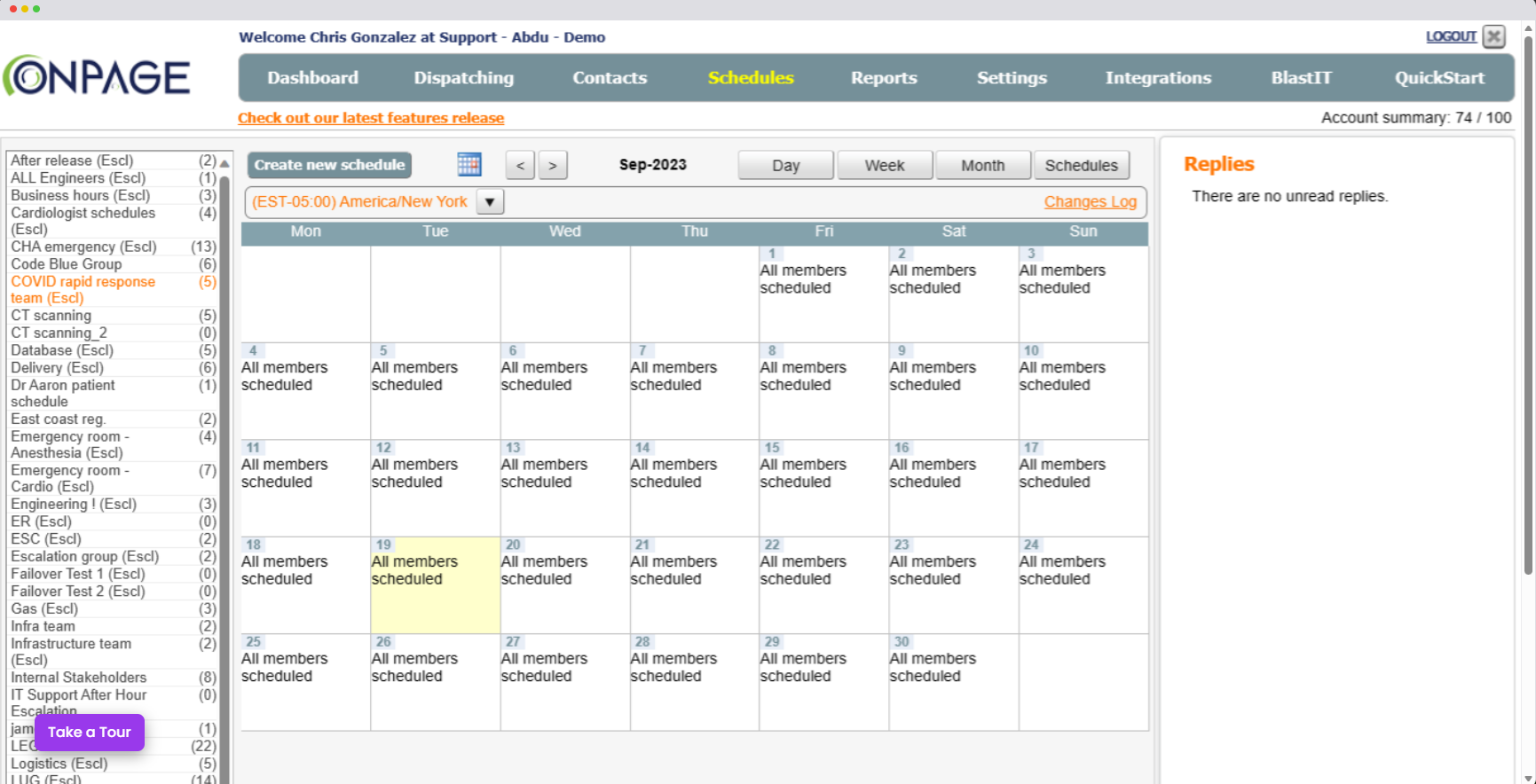
OnPage is built around secure internal messaging and live call routing for healthcare teams. Its HIPAA-compliant messaging app connects staff instantly, and live call routing directs patients to the right department from a single number. The platform also offers good multi-department coordination.
Key Features
- Connects patients to the right professional from a single number based on their needs.
- A HIPAA-compliant mobile messaging platform that allows care teams to share patient information securely.
- Gives patients and caregivers access to on-call teams around the clock.
Pros
- Strong escalation policies that ensure critical messages reach the right person without delays.
- Clear audit trail for every interaction, which supports HIPAA compliance documentation.
- Affordable option for practices that primarily need secure messaging and routing.
Cons
- The user interface is dated and may require a learning curve for less tech-savvy staff.
- Reporting and analytics are limited compared to platforms that offer engagement insights.
- Focused on internal communication and routing rather than patient conversion, so it won't address lead follow-up or booking automation.
4. Goodcall
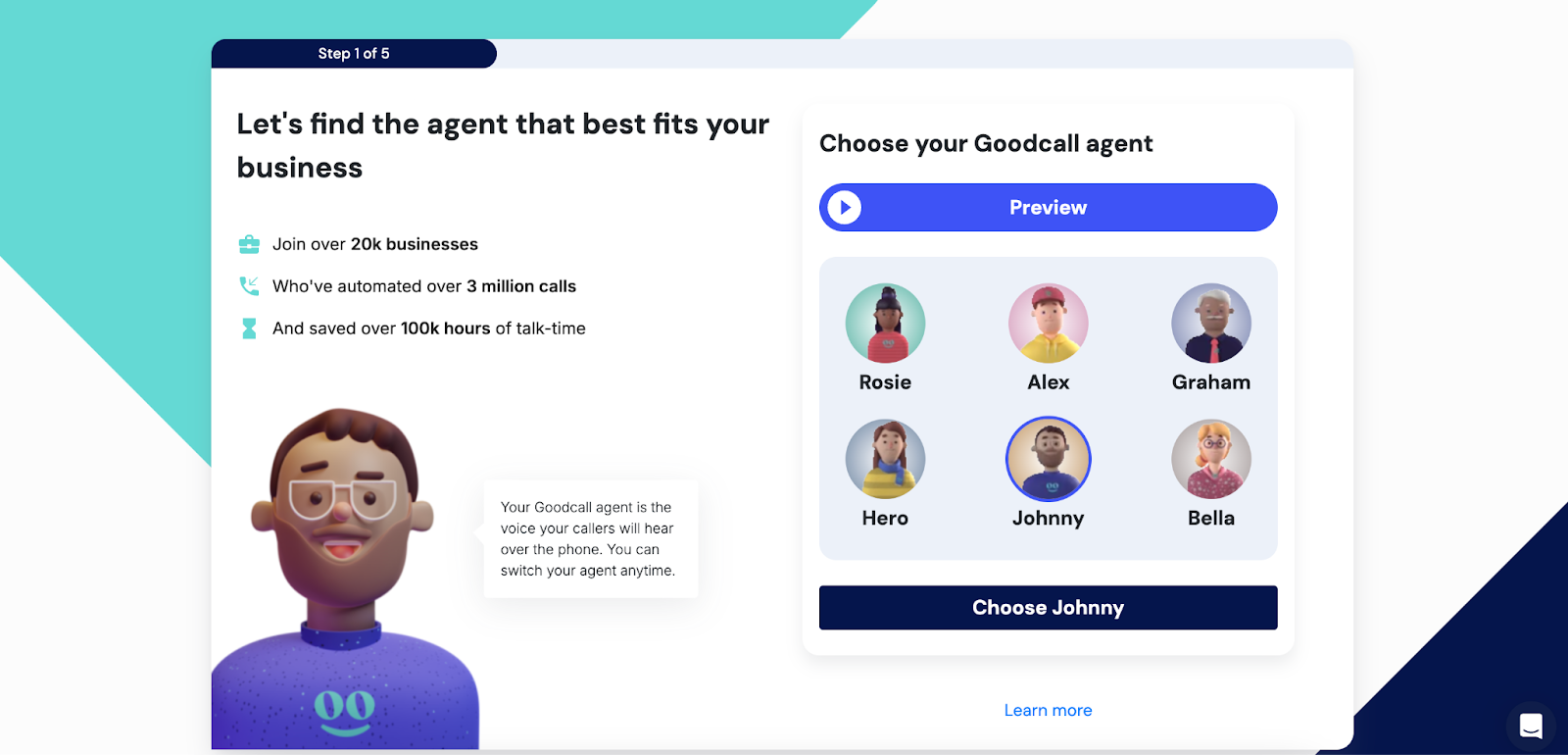
GoodCall's AI agent is fully customizable and trained on your practice's existing knowledge base, with scripts, protocols, and patient-facing language all tailored to how you operate. It can be configured for HIPAA compliance.
Key Features
- Assign specific capabilities to your agent, determining whether it handles inquiries, appointments, greetings, or other interaction types.
- Conversational flows that ask the right questions and guide patients to the right outcome based on their responses.
- Automates repetitive tasks like appointment booking, lead creation, and tracking.
Pros
- Deep customization lets practice owners control exactly how their agent sounds, responds, and routes calls.
- An active customer support team that's responsive to configuration questions.
- Transparent pricing with a clear feature breakdown across tiers.
Cons
- Entry-level pricing at $79/agent per month may be steep for smaller practices with limited call volume.
- Not built specifically for medical practices, so HIPAA configuration is the owner's responsibility rather than a default.
- Requires more initial setup compared to tools that ship with healthcare-specific workflows pre-configured.
5. AMBS Call Center
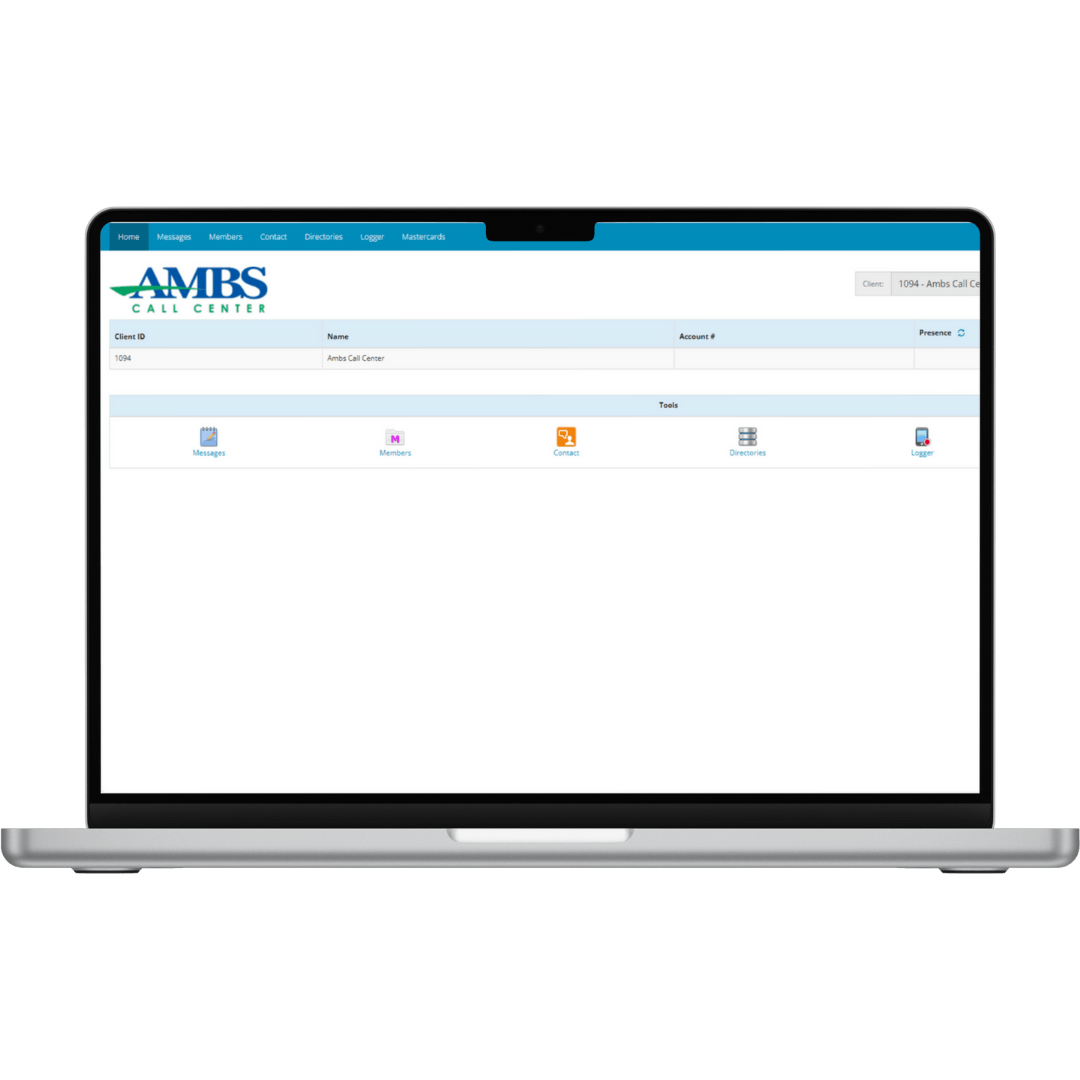
AMBS Call Center uses trained live agents who greet, qualify, and route every incoming call. Its key differentiator is bilingual capability, with Spanish-speaking patients getting the same professional experience as English-speaking callers. Response quality is also high.
Key Features
- Handles overflow calls when walk-ins overwhelm your front desk, covering patient inquiries, appointment scheduling, and routing.
- After-hours call coverage for inquiries and bookings when your staff is off the clock.
- Spanish-speaking agents provide the same level of service as English-speaking agents.
Pros
- Bilingual agents ensure Spanish-speaking patients receive equal quality of service.
- Offers both AI and live agent options, depending on your practice's preference.
- Well-suited for overflow and after-hours coverage when your front desk is at capacity.
Cons
- Per-minute pricing can become expensive for practices with high call volume or longer average call times.
- AI and live agent services require separate subscriptions, so combining both increases cost significantly.
- A human-only model means response capacity is limited by staffing, unlike AI tools that scale without headcount.
6. Clementine Answers
Clementine routes every incoming call based on patient needs using smart call diverting and offers fully customized scripting so interactions reflect your practice's tone and protocols. It's a traditional live answering service with smart routing layered on top, better suited for precise human-handled routing.
Key Features
- Agents with medical field experience handle your calls and patient interactions.
- Custom scripting controls the language and tone used on your answering service for a consistent patient experience.
- 24/7 coverage with easy coordination for on-call staff when your team is unavailable.
Pros
- A free trial lets you test the service before committing.
- Custom scripting gives owners control over how their practice is represented on every call.
- Agents with medical field experience bring familiarity with healthcare communication standards.
Cons
- Per-minute charges on top of the subscription rate can make the total cost unpredictable.
- No AI or automation capabilities, so all lead follow-up and booking confirmation require manual staff effort.
- Response capacity is tied to agent availability, which limits scalability during peak periods.
7. Televox
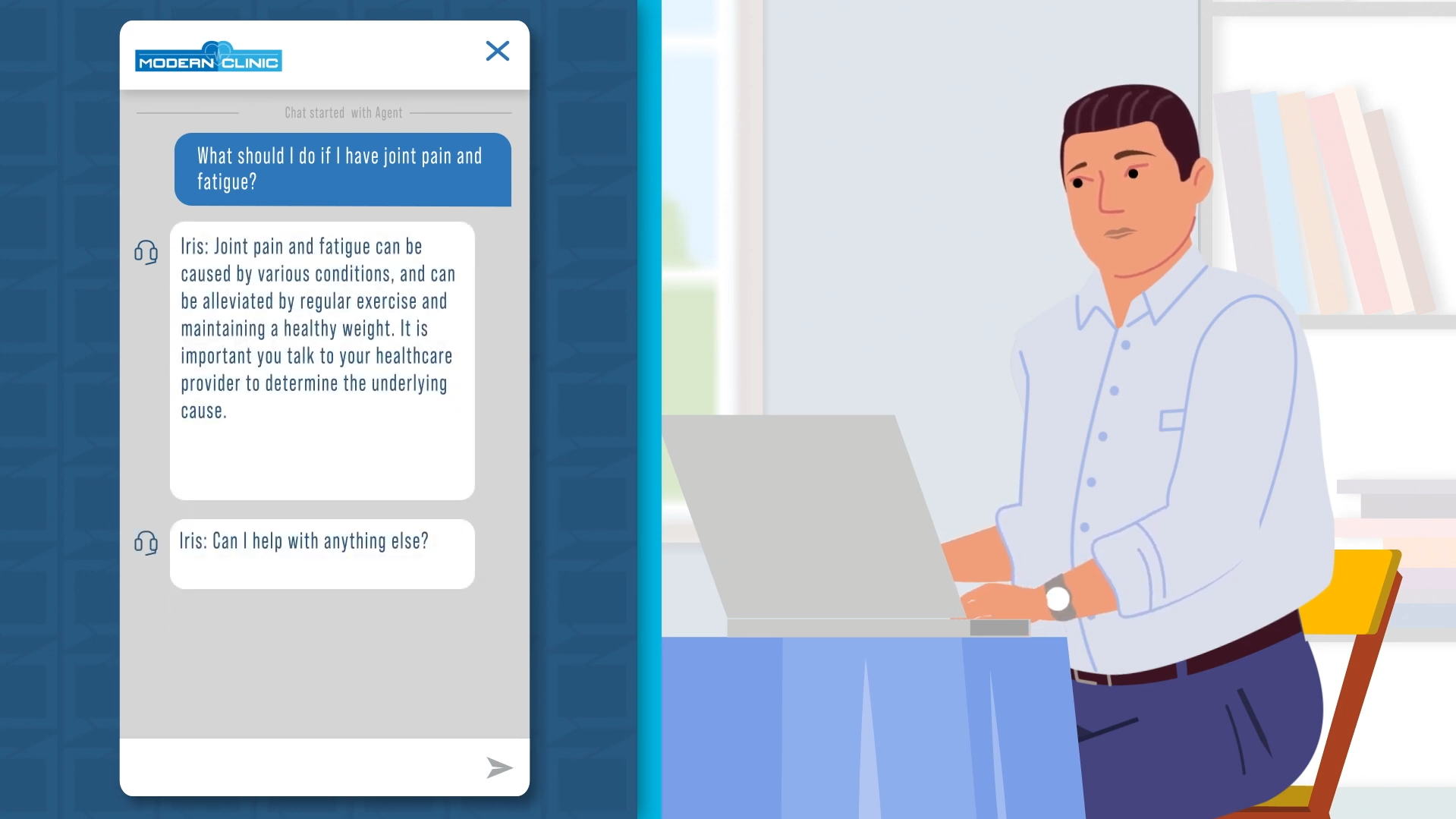
Televox's AI agent, Engage, recognizes tone and intent in real time during conversations, giving patients a natural experience rather than rigid phone menus. It also generates engagement-based insights from every interaction, and is a good fit for data-driven practices.
Key Features
- An AI agent draws from your knowledge base to handle patient inquiries over phone, text, and other channels with contextual awareness.
- Engagement analytics that capture data on patient interactions to inform operational decisions.
- Appointment logging, escalation, and tracking without assigning additional staff.
Pros
- A live interaction tracker makes it easy to monitor response rates and engagement in real time.
- Responsive customer service team.
- The AI agents' tone and intent recognition create a more natural patient experience than rigid IVR systems.
Cons
- Some patients find navigating the answering service difficult, suggesting the conversational AI isn't seamless in all scenarios.
- Limited control over individualized message customization.
- No public pricing makes it difficult to evaluate cost relative to alternatives before a sales conversation.
8. Smith.ai
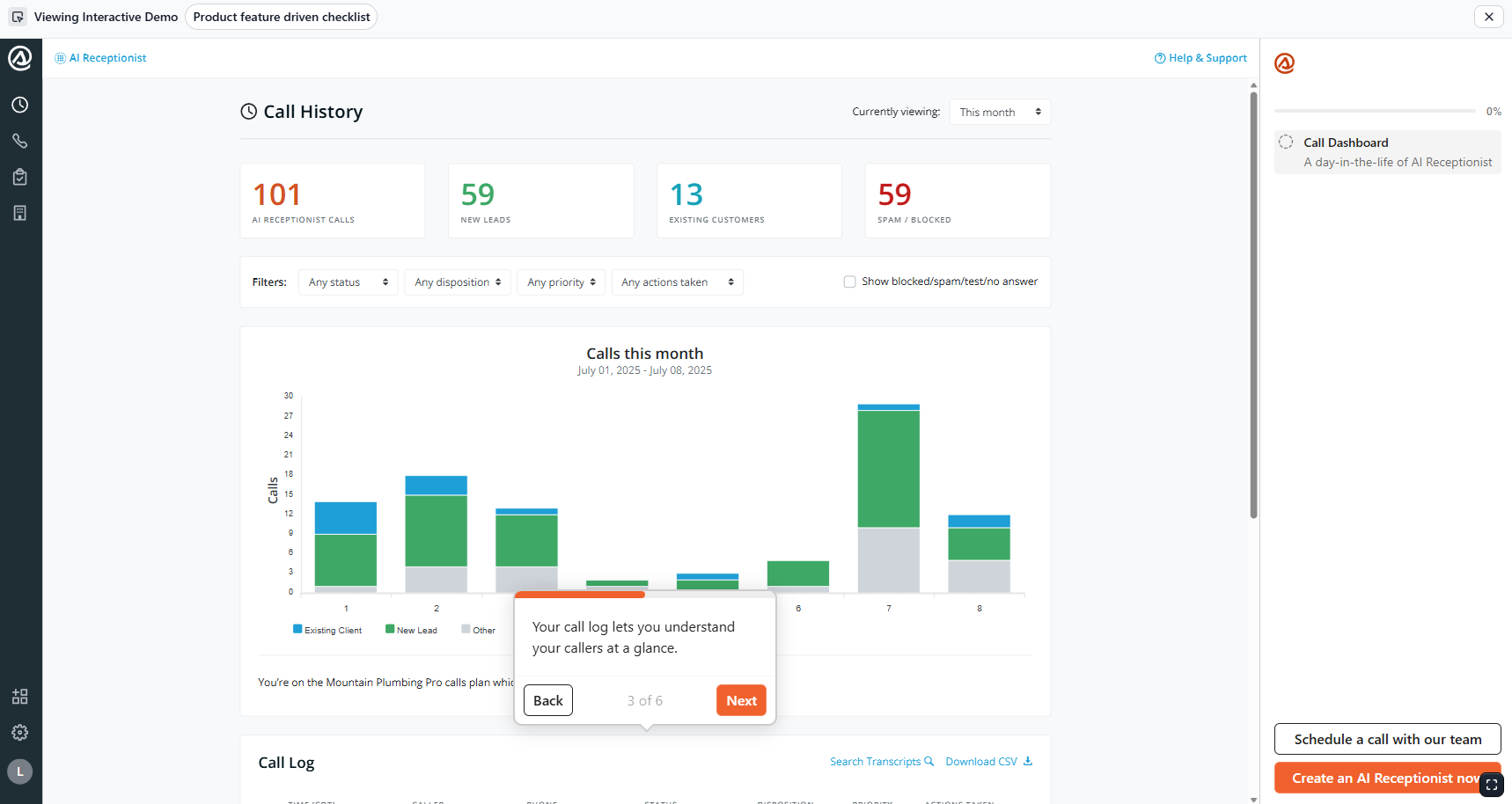
Smith.ai offers a hybrid AI and human model, with over 500 North America-based receptionists monitoring AI calls to ensure quality. The platform connects with over 7,000 tools and lets you design custom engagement workflows.
Key Features
- Design and train agents to represent your practice accurately across different inquiry types.
- Connects to over 7,000 tools and services for a more complete communication system.
- Over 500 North America-based human agents monitor AI interactions and step in when needed.
Pros
- Effective at identifying genuine prospects and filtering out low-quality inquiries.
- Extensive integration ecosystem with 7,000+ tool connections.
- A hybrid AI and human model offers flexibility depending on call complexity.
Cons
- Human agent involvement is locked behind the $500/month tier, making the entry-level plan limited for practices that need professional oversight.
- Some users report customer support steering toward upsells rather than resolving issues directly.
- The breadth of customization options can create a steep setup curve for practices without dedicated operations staff.
9. AnswerFirst
AnswerFirst holds both HIPAA and HITECH certifications and offers emergency dispatching and escalation protocols for urgent patient situations. It's a strong compliance-first option for practices where inquiry urgency varies widely.
Key Features
- Routes time-sensitive or critical information to the right personnel without compromising data security.
- 24/7 answering that extends your clinic's availability and handles patient inquiries when staff are off the clock.
- Trained receptionists handle incoming calls, qualify patient needs, and route them appropriately.
Pros
- Dual HIPAA and HITECH certification provides a higher compliance standard than most competitors on this list
- Emergency dispatching ensures urgent patient situations are escalated immediately, rather than sitting in a queue.
- Affordable for practices with moderate call volume.
Cons
- No mobile app for managing or monitoring calls remotely.
- Pricing requires a direct conversation, which adds friction for practices in early-stage comparison.
- No AI or automation capabilities, so lead follow-up and booking require manual effort from your staff.
10. Flatworld Solutions
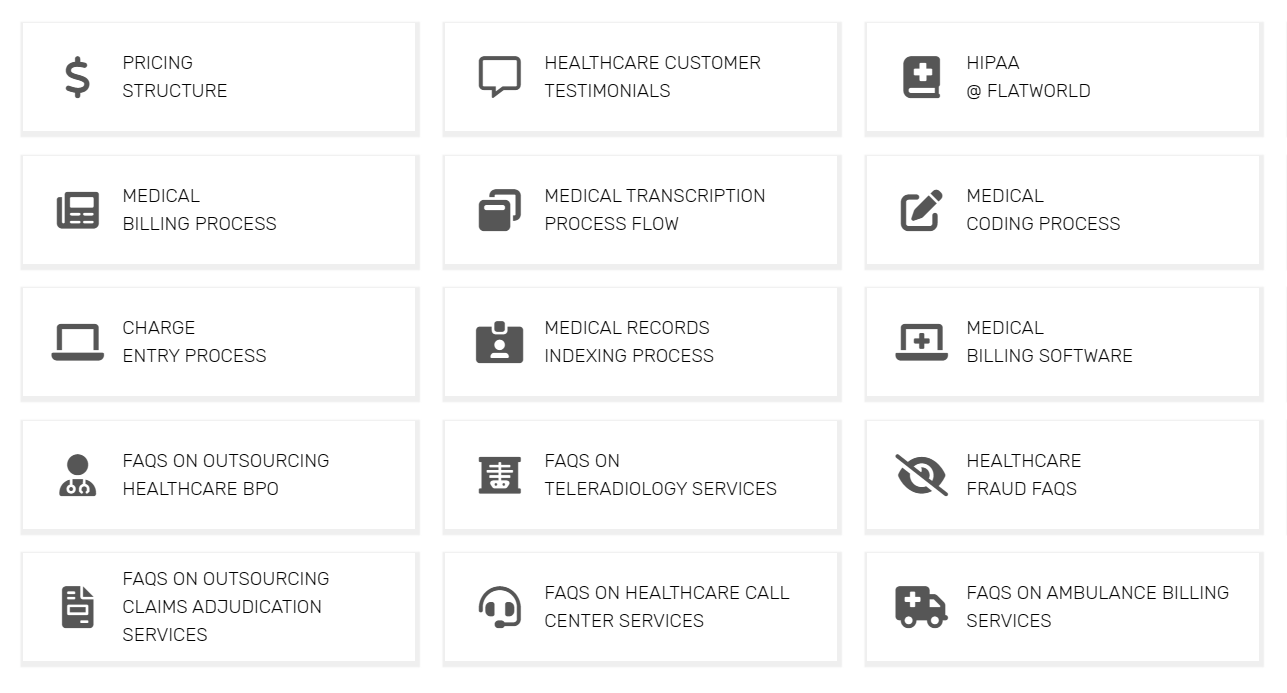
Flatworld Solutions covers the broadest channel range on this list, handling inbound calls, email, live chat, and virtual assistant support from one provider. Every interaction is evaluated against a quality assessment framework.
Key Features
- A 24/7 team available to handle patient inquiries, bookings, and routing.
- Live chat support for inquiries on your practice's website or other platforms.
- Always-on virtual assistant for routine requests and inquiries based on your practice's scripts and protocols.
Pros
- A rigorous quality assessment framework ensures a consistent patient experience across every channel.
- Broadest channel coverage on this list, consolidating calls, email, live chat, and virtual assistant support.
- Scalable for practices that anticipate growth across multiple communication channels.
Cons
- No public pricing makes it difficult to evaluate value before a sales conversation.
- The platform's breadth makes it less focused than purpose-built tools, which may mean shallower functionality in any single area.
- Better suited for larger practices with the operational capacity to manage a broad multi-channel setup.
What We Looked For in a HIPAA-Compliant Answering Service
We evaluated each tool on five criteria that matter most when choosing an answering service for a medical aesthetic or specialty practice. Here are those criteria:
- Compliance Rigor
We separated tools with built-in, documented HIPAA certification from those that offer compliance as a configurable add-on. Providers with HITECH certification scored higher, as did those with clear audit trail documentation and breach notification procedures.
- What Happens After the Call Is Answered
Most answering services take a message and pass it along. We prioritized tools that go further, qualifying the inquiry, triggering automated follow-up, and booking appointments without creating a manual handoff for your team.
- Channel Breadth vs. Channel Depth
Covering calls, texts, web chat, and email matters, but only if the service delivers consistent quality across each one. We penalized tools that spread thin across channels without meaningful functionality in any single one.
- How the Tool Fits Medical Aesthetic Workflows
Generic call centers handle volume. They don't understand consultation-based conversion cycles, treatment-specific inquiries, or the revenue impact of a missed after-hours lead. So, we assessed how well each tool maps to the way these practices actually operate.
- User Reviews
We cross-referenced vendor claims against user reviews on G2, Capterra, and healthcare-specific communities. Where patterns emerged around support quality, onboarding accuracy, or hidden fees, we factored those into our assessment.
How to Choose a HIPAA-Compliant Answering Service for Your Practice
Here’s a short guide to choosing the best HIPAA-compliant answering service for your medical and aesthetic practices:
- Verify Compliance Credentials First
A signed BAA is non-negotiable. So, look for providers with documented HIPAA certification, and HITECH if possible, before evaluating anything else. While some services can be configured for compliance, it's simpler and safer to choose one that's already certified.
- Match Channels to Where Patients Reach Out
Identify where your inquiries come from. If patients call, text, and message through your website, you need a service that covers all three. Choosing a call-only service when half your inquiries come through web chat leaves money on the table.
- Prioritize Automation That Converts
The most valuable answering services don't just take messages. They qualify leads, follow up automatically, and book appointments directly in your scheduling system. That reduces manual work for your team and ensures no inquiry sits unanswered while your staff catches up.
- Confirm Your Scheduling System Integrates Cleanly
Your answering service should connect directly with your existing calendar. Any disconnection between the answering service and your scheduling system creates gaps where bookings get lost or double-booked.
- Look for Customization That Fits Your Workflows
Every practice operates differently. But the right service adapts to your scripts, protocols, and routing preferences rather than forcing you into a generic template.
Choose Compliance and Conversion Together
Every tool on this list meets baseline HIPAA requirements, but they vary in what happens after the call is answered. Some take messages, others route calls, and a few automate the full path from inquiry to booked appointment. Each serves a specific purpose. But none are built to fully support the entire patient journey from first inquiry to confirmed appointment in real time.
Recura stands apart by doing exactly that. Instead of just answering calls, it responds to every inquiry, call, text, and web chat within 30 seconds, 24/7. It doesn’t just capture leads. But it qualifies them, follows up automatically, and books, reschedules, or cancels appointments directly in your calendar. That means no delays, manual work, and lost opportunities, especially after hours, when 30–40% of inquiries happen.
So, book a demo to see how Recura works for your practice.
Frequently Asked Questions
How fast does Recura respond to new leads?
Recura responds to every new inquiry within 30 seconds, 24/7, including weekends and holidays. That speed matters because the first practice to respond typically wins the booking.
Can an answering service book appointments into my clinic calendar?
Some can. Recura books, reschedules, and cancels appointments directly in your scheduling system without staff involvement. Whereas most other answering services stop at message-taking or call routing and require your team to handle the actual booking.
How does Recura handle after-hours patient inquiries?
Recura's AI receptionist and AI Sales Director operate around the clock. After-hours inquiries are captured, qualified, and booked automatically, so you don't lose revenue during nights, weekends, or holidays.
What types of practices is Recura best suited for?
Recura is built specifically for medical aesthetics and specialty practices across the United States. This includes med spas, plastic surgery clinics, dermatology offices, weight loss clinics, and cosmetic dental practices.
How do I know if an answering service is truly HIPAA-compliant?
Look for a signed Business Associate Agreement (BAA), documented HIPAA certification (HITECH is a bonus), end-to-end encryption, access controls, audit trails, and clear data breach notification procedures. If a provider can't produce these, they aren't compliant.
What are the best HIPAA-compliant alternatives to a legacy answering service?
The realistic replacements are an AI receptionist, a specialist medical answering service, or bringing coverage in house. The difference that matters is whether the service takes a message or completes the booking. A message moves the work rather than removing it, and for a self-pay aesthetic inquiry the callback usually arrives after the patient has booked elsewhere.
Which AI answering services are designed for medical practices rather than general businesses?
Look for three things a general-purpose tool will not have: a signed Business Associate Agreement, refusal behavior on clinical questions with a clean handoff to a person, and knowledge of the treatments you actually offer. Recura publishes its Business Associate Agreement and is built for medical aesthetics and specialty practices.
What does a practice need in place before an answering service goes live?
Less than most expect, and the long pole is usually your own content rather than the technology. Our readiness checklist lists what to have ready, who owns each item, and what genuinely takes time.
Explore this post
Book a demo to see Recura in action