Best AI Appointment Scheduling Software for Med Spas & Specialty Practices
The Recura Team
Quick Summary
Med spas and specialty practices lose patients due to missed calls, slow responses, and inefficient scheduling, leading to lost revenue and high staff workload. AI-powered scheduling and automation solve this by capturing every inquiry 24/7, instantly booking appointments, and reducing no-shows through smart reminders and follow-ups.
Missed Calls and No-Shows Are Costing Practices Revenue
Missed calls, slow responses, and high no-show rates are quietly costing clinics a lot of revenue every day. Industry studies show that no-show rates in healthcare are often around 18% to 23%. Some practices also lose more than $150,000–$250,000 per year due to missed appointments.
An AI appointment scheduling software can help clinics deal with these problems in a much more effective way. Instead of relying only on busy front desk staff or basic booking systems, AI can respond instantly, qualify patients, and book appointments 24/7.
This article shares the 12 best AI appointment scheduling software for med spas & specialty practices, including their features, pros, and cons. You’ll also learn how to pick the right solution based on your practice size and needs!
Why Listen to Us?
At Recura AI, we’ve built and worked closely with AI-driven patient conversion systems designed specifically for med spas and specialty clinics. Our perspective comes from real experience integrating with EMRs like PatientNow and focusing on what actually matters in practice. That’s turning inquiries into booked appointments, reducing front desk workload, and improving revenue without disrupting existing systems.
Why Is an AI Appointment Scheduling Software Important for Med Spas and Specialty Practices?
AI-powered scheduling matters most for med spas and specialty clinics because they face unique financial, operational, and patient-care challenges. Here are the main reasons why a basic booking tool is no longer enough to support their complex scheduling needs efficiently:
Capture High-Value Leads: Answers every call, asks key questions, and books appointments so no potential patients are lost.
Reduce No-Shows: Sends automated reminders and fills cancelled slots using waitlists.
Smart Scheduling: Books appointments correctly based on provider, room, time, and treatment needs.
Personalized Communication: Sends tailored reminders and follow-ups based on each patient’s history.
Better Provider Utilization: Fills schedule gaps and prioritizes high-value treatments to improve revenue.
Less Staff Burnout: Handles routine booking, changes, and reminders so front desk staff can focus on patients.
12 Best AI Appointment Scheduling Software for Med Spas & Specialty Practices
Here’s a short comparison of the 12 best AI appointment scheduling software for practices:
#
Software
Core Focus
Works With Existing EMR
24/7 AI Booking
Main Strength
1
Recura AI
Patient conversion layer (lead → booking)
Yes (e.g., PatientNow)
Yes
Captures every call/text/chat and turns it into booked appointments fast
2
Optimal.dev
Marketing + lead generation
Partial
Yes
Good local SEO + AI voice for inbound leads
3
ModMed
Specialty EHR + practice management
No (full system)
Limited
Good clinical workflows + documentation
4
Fresha
Beauty/wellness booking system
Limited
Yes
Simple all-in-one booking + payments
5
Pabau
All-in-one clinic OS
No (full system)
Yes
Full patient journey in one system
6
Zenoti
Enterprise clinic OS
No (full system)
Yes
Powerful multi-location automation
7
Vagaro
Salon + spa booking system
Limited
Yes
Affordable and easy to use
8
Avicen
AI office management (new)
Yes
Yes
Combines marketing + scheduling
9
Yocale.ai
All-in-one scheduling + CRM
No (full system)
Yes
Google Business booking integration
10
Talkdesk
Enterprise contact center
Partial
Yes
Handles complex multi-provider scheduling
11
Podium
AI communication platform
Yes
Yes
Good messaging + full patient journey automation
12
Meevo
Salon/spa management system
Limited
Yes
Easy booking + good support
Now, let’s dissect each AI appointment scheduling platform in detail:
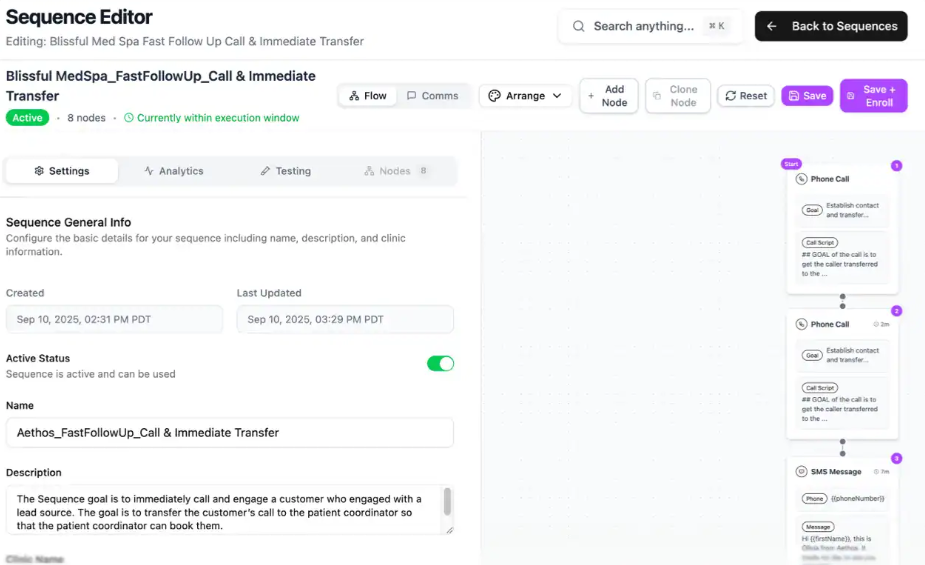
1. Recura AI
Recura is an AI-powered patient conversion and booking automation platform built specifically for medical aesthetics and specialty practices. Unlike traditional scheduling software or basic answering services, Recura functions as an “AI-driven conversion layer.”
It sits on top of existing practice management systems (like PatientNow) to manage the front-end patient journey. For instance, it can instantly capture leads from calls, texts, and web chat, qualifying them and booking consultations, all without human intervention. Its main goal is to ensure no inquiry is missed and that every lead is converted into a booked appointment as quickly as possible.
Key Features:
24/7 AI receptionist: Answers calls, texts, and web chats instantly so every lead gets a response within 30 seconds, even after hours or weekends.
Automated booking: Schedules, reschedules, and cancels appointments directly in the calendar system.
AI follow-ups: Nurtures leads automatically and guides them through the booking process without staff effort.
All-in-one messaging: Manages calls, texts, and chat together, so no lead is missed when switching channels.
Central dashboard: Shows all conversations and leads in one place for easy tracking.
Fast response time: Reaches every inquiry within 30 seconds to prevent losing potential patients due to delays.
Integration:
Provides EMR integration, workflow automation, and automated follow-ups through its AI receptionist. It functions especially well with PatientNow, allowing automatic deposit requests, appointment management, and calendar syncing.
Pros:
Captures after-hours inquiries and turns them into booked appointments.
Responds within 30 seconds, helping clinics secure patients who choose the fastest reply.
Reduces front desk work by automating calls, follow-ups, and confirmations.
Lowers costs by replacing the need for extra reception or sales staff.
Directly books, reschedules, and cancels appointments through the calendar system.
Cons:
Functions best when paired with an existing scheduling or EMR system.
2. Optimal.dev
Optimal.dev is an AI marketing and patient acquisition platform for med spas and specialty clinics. It uses AI voice agents to answer calls, qualify leads, and book appointments automatically, with a focus on improving local search visibility and capturing after-hours demand. Unlike traditional tools, it aims to help practices attract and convert more patients through fully automated communication.
Key Features:
AI voice agent: Answers calls 24/7, gives pricing info, and books consultations directly into the calendar.
Local search boost: Helps clinics rank higher on Google for searches like “fillers near me.”
Review automation: Sends texts to collect and manage 5-star patient reviews.
All-in-one dashboard: Combines leads, SEO, reviews, and ads in one place for easy management.
Integration:
Connects with popular aesthetic EMR and practice management systems like Zenoti, Boulevard, and PatientNow.
Pros:
Answers every call 24/7, reducing missed calls that often happen with busy front desks.
Uses AI trained on med spa treatments, pricing, and procedures instead of generic scripts.
Improves local Google search visibility and helps clinics show up in map results.
Cons:
Focuses mainly on marketing and lead generation, not full practice or clinical operations.
Can be complex to set up and manage compared to more plug-and-play solutions.
Works through multiple separate tools (voice, SEO, reviews) instead of one unified system.
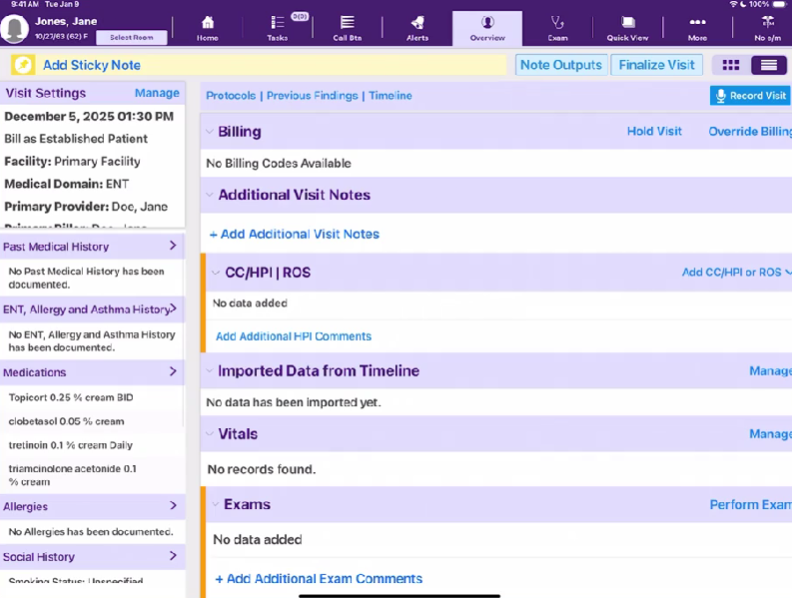
3. ModMed
ModMed is a specialty-focused EHR and practice management platform that uses AI to automate tasks like scheduling, patient communication, and billing. It is built mainly for larger medical specialties such as dermatology and orthopedics, with a focus on clinical records and operations rather than fast patient lead conversion.
Key Features:
AI front desk: Automates scheduling, messaging, and other front-office tasks to reduce staff workload.
AI scribe: Turns doctor-patient conversations into clinical notes automatically, saving documentation time.
Patient reactivation: Finds inactive patients and sends messages to fill open appointment slots.
Specialty workflows: Offers customized tools and templates for specialties like dermatology and plastic surgery.
Integration:
Connects with labs, imaging tools, and other healthcare software through its App Marketplace and APIs.
Pros:
Good EHR and practice management system with tools for charting, prescriptions, and compliance tracking.
Offers multiple AI tools for front desk tasks, billing, clinical notes, and patient communication.
Widely used by thousands of healthcare providers and known for its easy-to-use interface.
Cons:
Focuses more on clinical operations than patient lead conversion or appointment booking.
Requires practices to fully adopt its platform, which can make setup and switching more complex.
Some users find reporting difficult to use, and customer support is slower than expected.
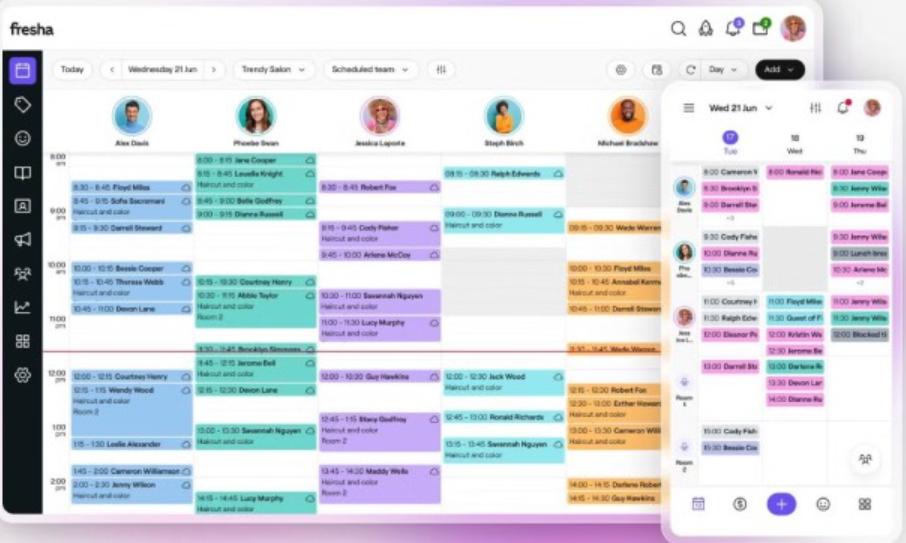
4. Fresha
Fresha is an AI-powered booking platform mainly designed for beauty, wellness, and salon businesses. It offers tools like AI reception, smart scheduling, payments, and resource management. But its system is built more for high-volume retail-style bookings than complex medical or clinical workflows.
Key Features:
Smart scheduling: Automatically organizes staff, rooms, and appointments, and helps recover missed booking opportunities.
Resource booking: Lets clinics schedule equipment or rooms separately from staff, useful for spa and wellness setups.
AI receptionist: Handles bookings and basic questions through SMS, email, and WhatsApp.
Dynamic pricing: Adjusts prices based on demand to fill empty time slots.
Integration:
Connects with tools for payments, marketing, and daily operations, and AI features through Google and Alexa. It also lets customers book appointments directly from Facebook and Instagram.
Pros:
Easy to use, with no technical training needed.
An all-in-one system that includes payments, marketing, and financing tools, reducing the need for extra software.
Good at managing rooms and equipment, making it useful for spas and shared spaces.
Cons:
Designed for general beauty and wellness businesses rather than high-value medical aesthetics workflows.
Some users report unclear or unexpected marketplace fees and slow support response.
Data can be hard to export when switching platforms, sometimes requiring extra help or manual work.
5. Pabau
Pabau is an all-in-one clinic management system for med spas and private clinics. It includes scheduling, EMR, intake forms, consent documents, and AI tools for clinical notes in one platform. Pabau manages the full patient journey in a single system, but requires clinics to use its complete software setup.
Key Features:
AI clinical notes: Automatically creates SOAP, DAP, and BIRP notes during visits, saving a lot of documentation time.
Fill empty slots: Sends instant SMS alerts to waitlisted patients when cancellations happen to keep the schedule full.
Online forms: Patients fill out medical history and consent forms before their visit, sent automatically after booking.
Self-booking portal: Lets patients book appointments, pay deposits, and view records online, reducing front desk workload.
Integration:
Connects with tools like Stripe, Xero, Google Calendar, Zapier, and Doctolib. It also supports automation and custom integrations through Make and its open API.
Pros:
All patient info (booking, forms, notes, and billing) is stored in one connected system instead of separate tools.
Dedicated onboarding support helps clinics get started.
Built with security and HIPAA-style compliance, making it suitable for medical use.
Cons:
Requires a full switch to its system to use all features, not just a plug-in tool.
Can take time to learn and set up advanced automation features.
Functions best as a full replacement system, with less focus on improving lead conversion.
6. Zenoti
Zenoti is an AI-powered, all-in-one platform for beauty, wellness, and medspa businesses that handles scheduling, charting, inventory, and payments in one system. However, it works as a closed system and does not easily integrate with EMRs, requiring clinics to fully adopt its platform.
Key Features:
AI receptionist: Answers missed calls 24/7, books appointments, suggests add-ons, and helps fill cancelled slots, turning many missed calls into bookings.
AI scribe: Automatically creates clinical notes and charts during patient visits.
AI lead manager: Collects leads from all channels, ranks them, replies quickly, and follows up until they book.
AI business advisor: Analyzes performance data and gives simple growth suggestions based on business trends.
Integration:
Connects with tools like QuickBooks, Xero, payroll, and inventory systems to simplify business operations. It also integrates with Shopify for online product sales while using Zenoti for appointment bookings.
Pros:
Built for multi-location businesses with centralized control, reporting, and management across all branches.
Uses multiple AI tools to handle calls, leads, inventory, and other business operations in one system.
Good customer support with good reviews for onboarding help and account management.
Cons:
Requires switching fully to its platform, replacing existing EMR and clinic systems.
Setup can take weeks and may feel complex or overwhelming for new users.
Designed as a full business operating system, not a lightweight tool that functions with existing clinic software.
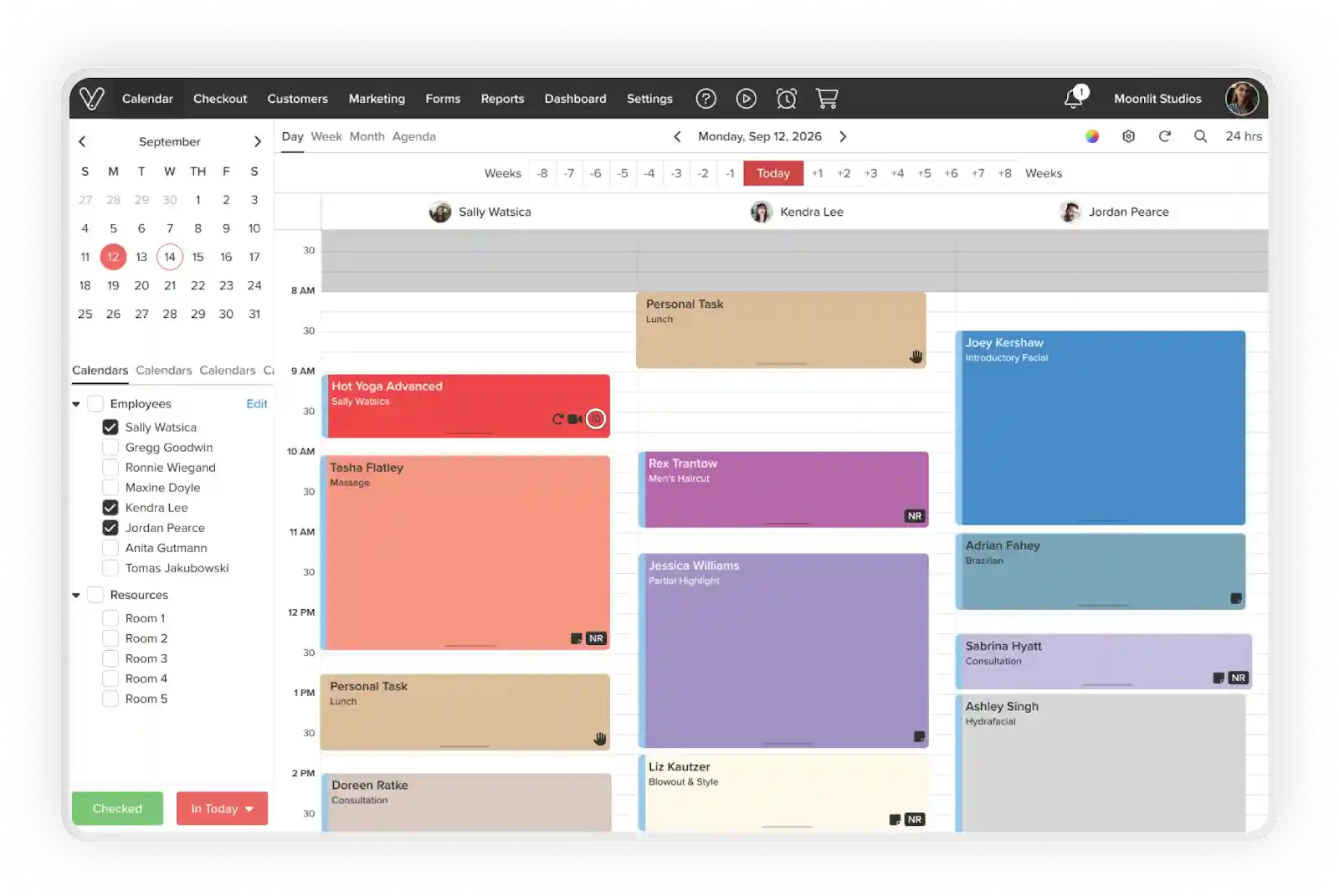
7. Vagaro
Vagaro is an affordable all-in-one booking and POS platform for salons, spas, and wellness businesses, offering scheduling, payments, and basic medical-style notes. It has added some HIPAA-compliant features for med spas, but it is still mainly designed for beauty and retail workflows rather than full medical operations.
Key Features:
Online booking: Lets clients book anytime, requires deposits, and automatically fills cancelled slots using a waitlist.
EMR tools: Provides HIPAA-compliant notes, digital forms, e-signatures, and before/after photo storage.
Payments & POS: Handles payments, memberships, packages, and card storage in one system.
Marketplace exposure: Lists businesses in Vagaro’s marketplace to help attract new clients.
Integration:
Connects with tools like QuickBooks, Google Calendar, Mailchimp, Zoom, Stripe, and Xero. It also supports Zapier and an API for more integrations, and links with social media and payroll systems like Instagram and Gusto.
Pros:
Low monthly cost with no long-term contract, making it good for small clinics or solo providers.
Easy to use, with 24/7 customer support.
All-in-one system for scheduling, payments, marketing, and basic EMR tools.
Cons:
Many important features cost extra, so the total price can add up quickly.
Designed mainly for salons and spas, so it lacks deeper medical and clinical tools needed for med spas.
Some users report system glitches, slow performance, and payment delays.
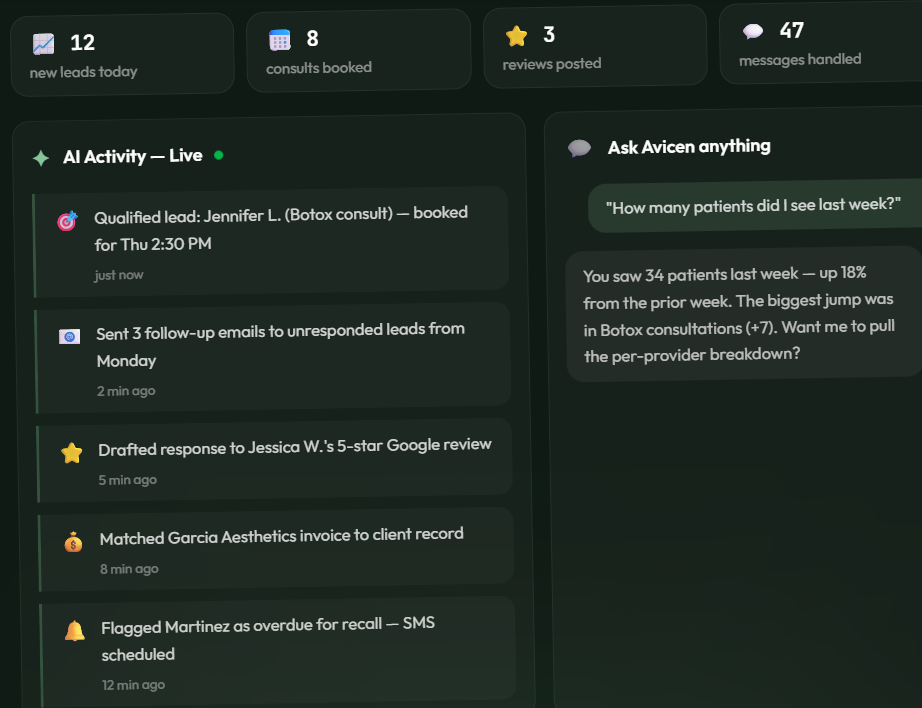
8. Avicen
Avicen is a new AI office management tool for med spas, plastic surgeons, and dental clinics that helps automate marketing, patient communication, and scheduling from one dashboard. It connects with existing systems to manage operations in one place, but it is still a very new platform.
Key Features:
Office management: One dashboard to handle marketing, patient communication, and scheduling.
Marketing tools: Runs automated campaigns to attract and keep patients.
Scheduling support: Works with existing systems to manage appointments without replacing them.
Multi-specialty use: Designed for med spas, plastic surgeons, and dental clinics.
Integration:
Links with booking tools, ad platforms like Google Ads and Instagram, email, and review systems. It operates as a marketing layer on top of existing software without changing current workflows.
Pros:
Tries to combine marketing and scheduling in one tool, which may reduce the need for multiple software systems.
Built on modern technology as a new platform without old system limitations.
Designed to work with existing tools instead of fully replacing them.
Cons:
Very new with no proven track record, reviews, or long-term user data yet.
Tries to serve multiple specialties, which may limit deep, clinic-specific workflows.
Unclear how advanced its scheduling is for complex, multi-provider practices.
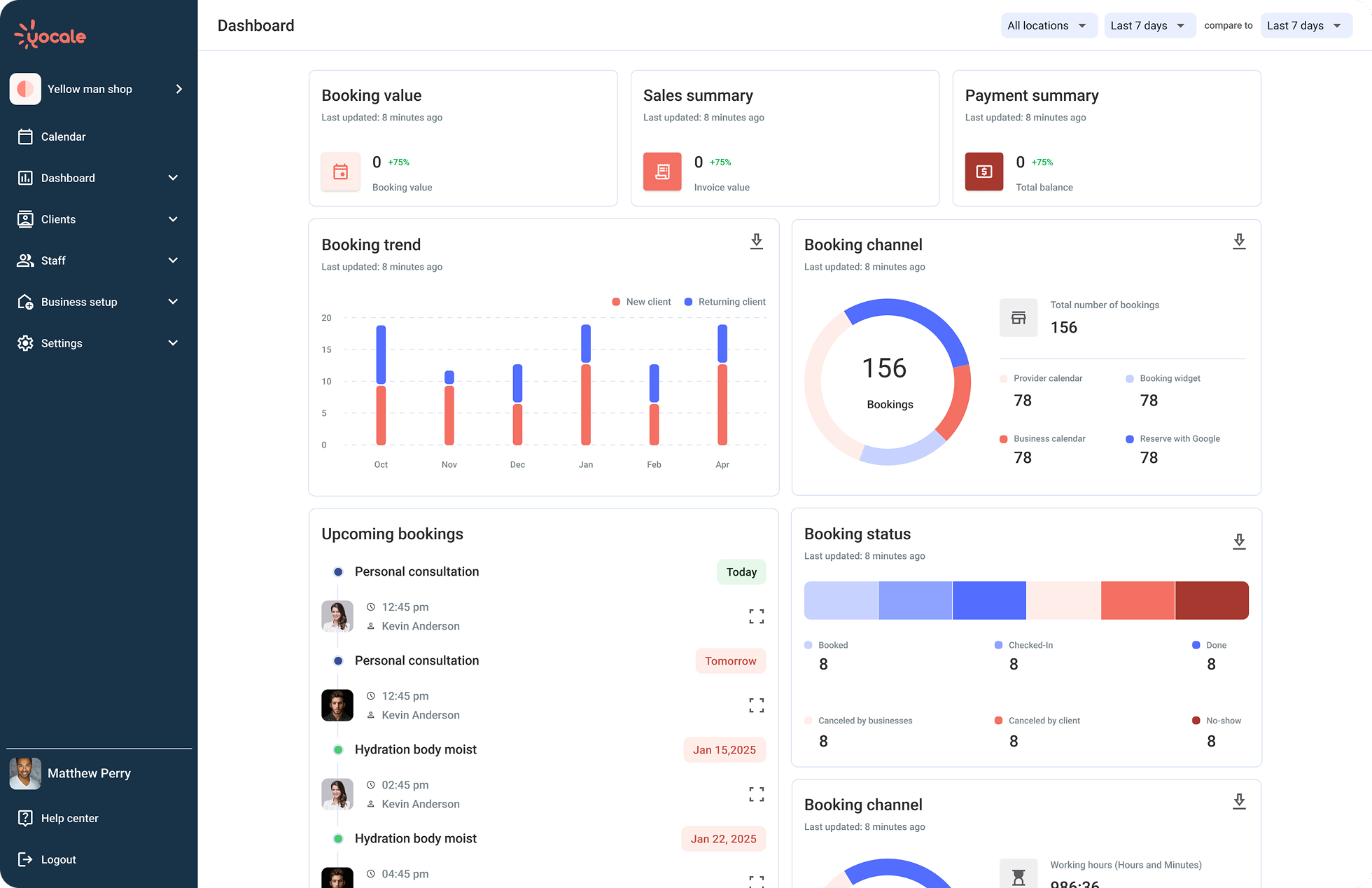
9. Yocale.ai
Yocale is an AI-powered platform for beauty, wellness, and med spas that combines scheduling, CRM, payments, and analytics in one system. It also connects with Google Business to allow direct booking without redirecting clients elsewhere. However, it is a full, all-in-one system that requires clinics to use its platform rather than functioning as a plug-in with existing EMR tools.
Key Features:
Google booking: Lets clients book directly from Google Business Profile, making scheduling faster and easier.
Website booking widget: Adds a booking tool on your website so clients don’t need to leave your page.
Automated reminders: Send SMS and email reminders to reduce no-shows.
Multi-location scheduling: Manages staff and appointments across multiple locations and avoids double-booking.
Integration:
Connects with CRMs, POS, and analytics tools to keep data synced. It also functions well with Google Calendar and Google Meet, automatically creating meeting links and sending reminders.
Pros:
Combines scheduling, CRM, analytics, and automation in one system.
Good customer support with quick, helpful responses during setup and daily use.
Lets clients book directly from Google search, helping bring in more local customers.
Cons:
Less advanced features compared to some competitors, especially in reporting and customization.
The payment and checkout process can feel outdated, with limited card reader integration.
Works well for basic scheduling and bookings, but may not suit clinics needing deeper, more advanced systems.
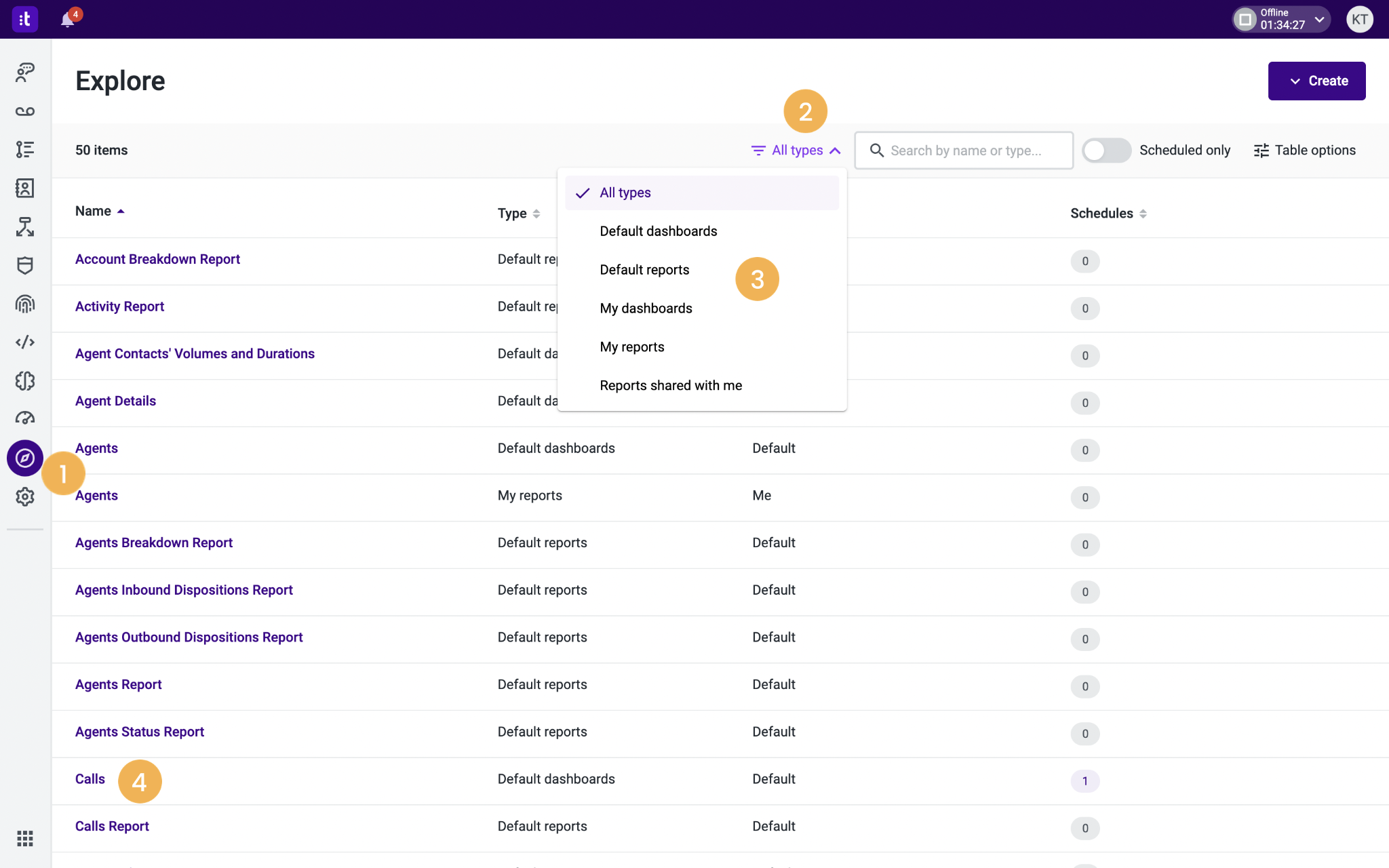
10. Talkdesk
Talkdesk is an enterprise AI customer experience platform used mainly by large healthcare systems and call centers. It helps manage complex, multi-provider scheduling by combining AI agents, staff, and backend systems, making it more suited for big organizations than small med spas.
Key Features:
Smart scheduling automation: Uses AI to manage complex, multi-step bookings by checking clinical rules, referrals, and provider availability in real time.
Multi-channel communication: Handles calls, chat, SMS, WhatsApp, and other messages from one system.
Smart patient matching: Routes patients to the right specialist based on their needs and medical info.
EHR & insurance integration: Connects with medical records and insurance systems to check patient details and coverage during booking.
Integration:
Offers 60+ integrations and APIs to connect with business tools and improve contact center workflows. Its strongest integration is with Salesforce, combining calls, messages, and CRM data in one place with AI features like routing and transcription.
Pros:
Manages complex scheduling for multi-provider clinics, including rules, referrals, and care coordination.
Dependable system with strong uptime, used by large healthcare organizations.
Flexible setup that can function with existing contact center tools or be fully implemented as needed.
Cons:
Best suited for large enterprise healthcare operations rather than simple patient conversion and booking needs.
Some users report occasional delays, lag, or interruptions in performance.
Reporting tools can be limited, with advanced reports often needing manual export to Excel.
11. Podium
Podium is an AI communication platform for med spas that includes an AI assistant to handle messaging, lead management, and patient follow-ups. It connects with EMRs and clinic workflows to manage the full patient communication journey, but requires using its own platform ecosystem.
Key Features:
Custom AI assistant: Clinics can train and adjust the AI to match their tone, workflows, and how they respond to patients across calls, texts, web, and social media.
Full patient automation: Handles the entire journey from first inquiry to booking, reminders, intake forms, reviews, and post-care messages without staff involvement.
EMR integration: Connects directly with clinic systems to access calendars, patient records, services, and inventory.
Custom communication style: Can be adjusted to follow clinic protocols and respond with empathy in different patient situations.
Integration:
Integrates with 200+ tools like Calendly, Mailchimp, QuickBooks, and Salesforce to automate messaging and workflows. It also works through Zapier with apps like Google Sheets, Facebook Lead Ads, and JotForm.
Pros:
Built specifically for med spas, with workflows and communication styles that can be customized to match each clinic.
Unified inbox lets teams manage and track all patient messages from one dashboard, reducing missed follow-ups.
Covers the full patient journey from first inquiry to follow-ups, reducing the need for multiple tools.
Cons:
Requires using its full system, meaning clinics often need to replace existing EMR and tools.
Still relatively new in the medspa space, so long-term specialization is still developing.
May duplicate features if a clinic already uses an established EMR and communication setup.
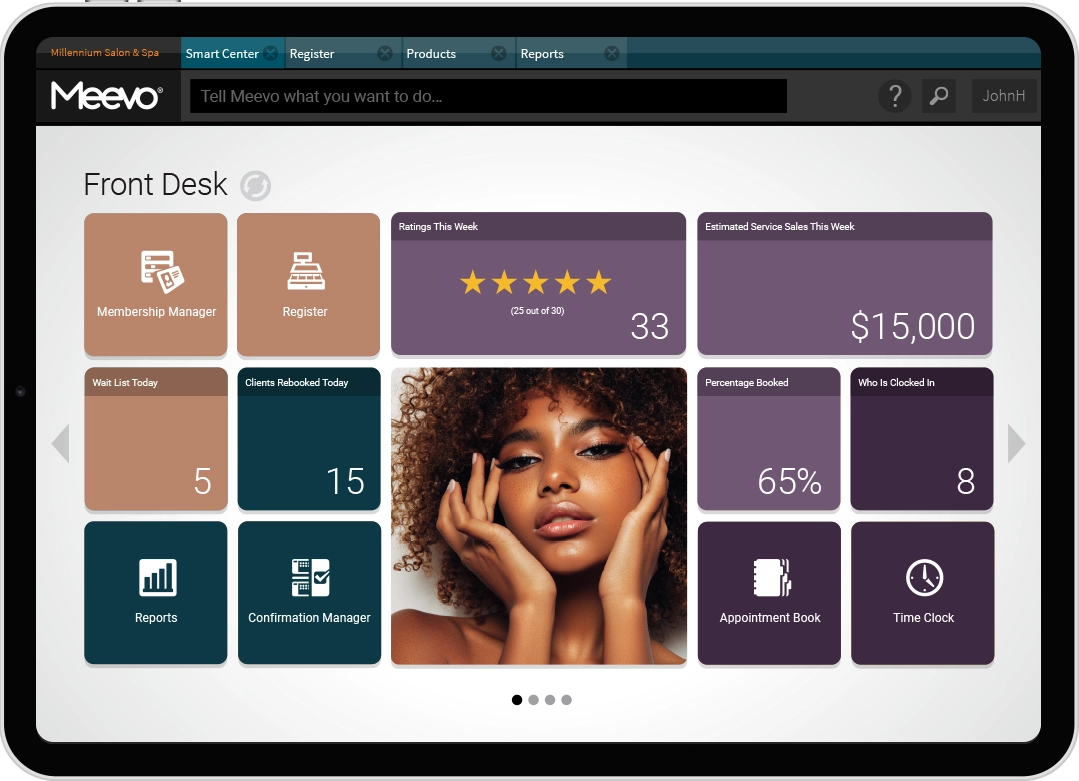
12. Meevo
Meevo is a cloud-based management platform for salons and spas that has recently added med spa features like charting and HIPAA-compliant documentation. However, it is still mainly designed for high-volume beauty services like salons rather than medical aesthetics.
Key Features:
Modern online booking: A new, fast, and simple booking system that makes it easier for clients to schedule appointments online.
SMS messaging: Lets clients and staff communicate by text to confirm, reschedule, or ask questions instantly.
Auto waitlist filling: Automatically contacts waitlisted clients when openings become available.
Med spa charting tools: Provides HIPAA-compliant templates for clinical notes that can be reviewed and managed by providers.
Integration:
Connects with tools like QuickBooks, CareCredit, and other salon/spa apps. It also has a marketplace with built-in extras like digital forms, eGift cards, and reporting dashboards.
Pros:
Good customer support with quick responses, even on weekends.
Easy-to-use system that helps staff manage bookings and appointments smoothly.
Strong scheduling tools designed for salons, including drag-and-drop booking and equipment tracking.
Cons:
Originally built for salons, it doesn’t fully fit high-value medical or surgical procedures.
Can become expensive, especially for smaller clinics, as pricing increases with higher tiers.
Hard to troubleshoot, and often requires customer support due to unclear system logic.
How We Chose the Best AI Appointment Scheduling Software for Med Spas & Specialty Practices
We didn’t choose AI scheduling software based on popularity. Each one was carefully evaluated using six criteria that are specifically important for med spas and specialty clinics:
Specialty-focused workflows: We prioritized tools that understand med spa needs like consult sequencing, injectable timing, and multi-step treatments instead of treating all appointments the same.
True AI conversion: We only included platforms where AI can qualify leads, handle after-hours inquiries, and directly book appointments, not just answer questions.
EMR integration: Preference was given to tools that connect in real time with EMR systems without manual work or custom builds.
HIPAA compliance: We chose platforms that support full HIPAA requirements and provide a Business Associate Agreement for all communication channels.
Fast response & 24/7 coverage: We focused on systems that respond within 30 seconds and handle after-hours leads to avoid lost bookings.
Proven results: We selected tools backed by real user data, case studies, and measurable improvements in bookings and revenue, not just marketing claims.
How to Pick an AI Appointment Scheduling Software for Your Practice
Choosing the right AI scheduling software for your practice starts with understanding your biggest problem instead of trying to fix everything at once. The section beneath explains what to focus on so you can pick a tool that actually fits your practice:
Start with your main problem: Don’t try to fix everything at once. Focus on your biggest issue, like missed leads, no-shows, overwhelmed staff, or poor patient rebooking.
What the platform must have:
Real-time EMR/scheduling integration to avoid manual work and booking errors.
24/7 automated booking to capture after-hours patients.
Full HIPAA compliance with a signed BAA.
Clear performance tracking, like response time, bookings, and no-show rates.
Simple real-world test: Try booking a consultation through the AI after hours and check if it can understand requests. Check availability, ask basic questions, and confirm the booking without human help.
Choose the software based on your practice size:
Small clinics: Simple AI platform with fast setup.
Multi-location groups: Centralized scheduling and reporting.
High-volume med spas: Strong automation for waitlists and cancellations.
Specialty clinics: Deep EMR and medical workflow support.
Watch total cost: Cheap tools can still cost more due to manual work, missed leads, weak reminders, or extra integration fees.
Turn Missed Calls Into Booked Appointments Without Replacing Your System
The best AI appointment scheduling software for med spas & specialty practices should fix the real problems, like missed calls, no-shows, staff overload, and slow follow-ups. Many platforms try to do everything, but most are either too complex, salon-focused, or dependent on replacing your existing systems.
Recura AI is different. It is built specifically for med spas and specialty practices as a focused AI conversion layer, not a full system replacement. It functions on top of your existing EMR, like PatientNow, responds to every inquiry within seconds, books appointments 24/7, and automatically follows up with leads. So, no opportunity is lost. It’s designed to reduce front desk workload while directly increasing booked consultations and revenue.
If you want a simple way to capture more patients without switching your entire setup, book a demo with Recura AI.
FAQs
1. What’s the difference between AI scheduling and a regular online booking widget?
A booking widget simply shows a calendar so patients can pick a time slot. Whereas AI scheduling goes much further. It communicates with the patients, answers calls or messages, checks requirements, qualifies leads, books appointments, sends confirmations, and handles changes automatically without staff involvement.
2. Is AI scheduling HIPAA compliant?
Yes, but only if the provider offers a signed Business Associate Agreement (BAA) that covers all communication methods like calls, texts, email, and chat. Without it, patient data isn’t properly protected.
3. How much does AI scheduling software typically cost?
Pricing can range from about $99–$129/month for basic solo tools to $1,000+/month for enterprise systems with full AI voice features. Most med spa-focused platforms fall in the $300–$1,000/month range. Though be careful with “free” plans, as they usually don’t include important features like AI calls or after-hours support.
4. Will AI replace my front desk staff?
AI takes care of routine tasks like after-hours calls, reminders, rescheduling, and filling cancellations, so staff can focus on patients and complex cases. Most clinics use a hybrid setup where AI manages about 60–80% of bookings, and humans manage the rest.
5. How quickly can we implement AI scheduling?
Most purpose-built tools can be set up in about 1–3 weeks for basic use, or 4–6 weeks for full EHR integration. If setup takes more than 8 weeks, it often means the software isn’t designed for med spas and needs heavy customization.
How does AI scheduling improve provider utilization?
By filling the gaps a person cannot get to. Most unused capacity is not a demand problem, it is inquiries arriving when the front desk is busy or closed, and last-minute cancellations that nobody has time to backfill. A system that answers immediately and books from live availability closes both.
Can AI handle scheduling across phone, text and web at the same time?
Yes, and it is worth confirming the channels are one system rather than three tools with separate calendars. Ask to see the same patient move between channels without the appointment being duplicated. Our guide to what answers your phones when nobody can covers what to test.
Ready to grow with Recura?
Recura answers calls, texts back leads, and books consults, so your calendar fills even overnight.