June 19, 2026
10 Best AI Medical Receptionist Platforms to Try In 2026

The Recura Team
June 19, 2026
The Recura Team

Medical practices lose a lot of revenue due to missed calls, long wait times, and limited front-desk capacity. Though the best AI receptionists can solve this by managing calls, messages, and scheduling 24/7. They respond instantly, book appointments in real time, and follow up automatically, helping practices capture more patients, reduce missed opportunities, and run more efficiently without overloading staff.
Medical practices lose significant revenue due to missed appointments and poor phone access, often starting with unanswered calls. Each unused appointment can cost about $200, contributing to over $150 billion in annual costs in the U.S.
Phone calls still drive about 80% of bookings, yet access is fragile. 60% of callers on hold hang up, 30% don’t call back, and 80% sent to voicemail leave no message, causing lost appointments before they’re scheduled. Research also shows that long wait times reduce perceived access to care and increase patient switching.
All these issues happen because human receptionists are limited in capacity and availability. AI receptionists can solve them by managing calls, scheduling, and follow-ups 24/7 at a lower cost. This guide reviews the 10 best AI medical receptionist tools.
At Recura AI, we have built an AI medical receptionist system by focusing on what actually improves clinic performance, like faster responses, automated booking, and more patient conversions. Our aim is not just to add features, but to help medical and aesthetic practices turn every inquiry into a booked appointment. This review is based on our real understanding of how these tools operate in actual clinics. We believe the best systems are the ones that help clinics grow revenue, not just manage messages.
An AI medical receptionist is software that manages patient communication for a clinic automatically, 24/7, without needing staff. It can answer calls, reply to texts and web chats, book or reschedule appointments, collect patient details, verify insurance, send reminders, and answer common questions in real time.
Unlike basic chatbots that follow fixed scripts or human virtual receptionists limited by working hours and cost, an AI medical receptionist understands context and adapts to patient conversations. It can also take direct actions inside clinic systems, such as booking appointments and updating records automatically.
A medical AI receptionist also goes beyond practice management software by actively communicating with patients instead of just storing information. In 2026, these tools mainly come as voice AI for phone calls, chat AI for messages and web inquiries, or hybrid systems that manage both automatically.
Here’s a short comparison of all the top 10 AI medical receptionist software reviewed in the later section:
| # | Tool | Type | Automation Level | Main Strength |
|---|---|---|---|---|
| 1 | Recura AI | Medspa/aesthetics AI-powered lead conversion + scheduling (focus after-hours booking) | Fully automated | Converts inquiries into bookings |
| 2 | Sully.ai | Full AI healthcare workforce | Fully automated | End-to-end clinical + front desk AI |
| 3 | DeepCura | Clinical workflow automation | Fully automated | Good documentation + billing AI |
| 4 | ARIA | Scheduling & patient coordination | Fully automated | Deep Epic integration |
| 5 | OmniMD AI | Admin + revenue cycle automation | Fully automated | Billing + intake + scheduling |
| 6 | Simbie AI | Voice call automation | Fully automated | Handles high call volume efficiently |
| 7 | Smith.ai | AI + human receptionist hybrid | Hybrid (AI + human) | Human backup for complex calls |
| 8 | Weave | Communication & engagement | Semi-automated | Improves response & reduces no-shows |
| 9 | Freed AI | Clinical documentation + intake | Semi-automated | Good AI scribe capabilities |
| 10 | Voiceoc | Omnichannel patient communication | Fully automated | Multi-channel patient interaction |
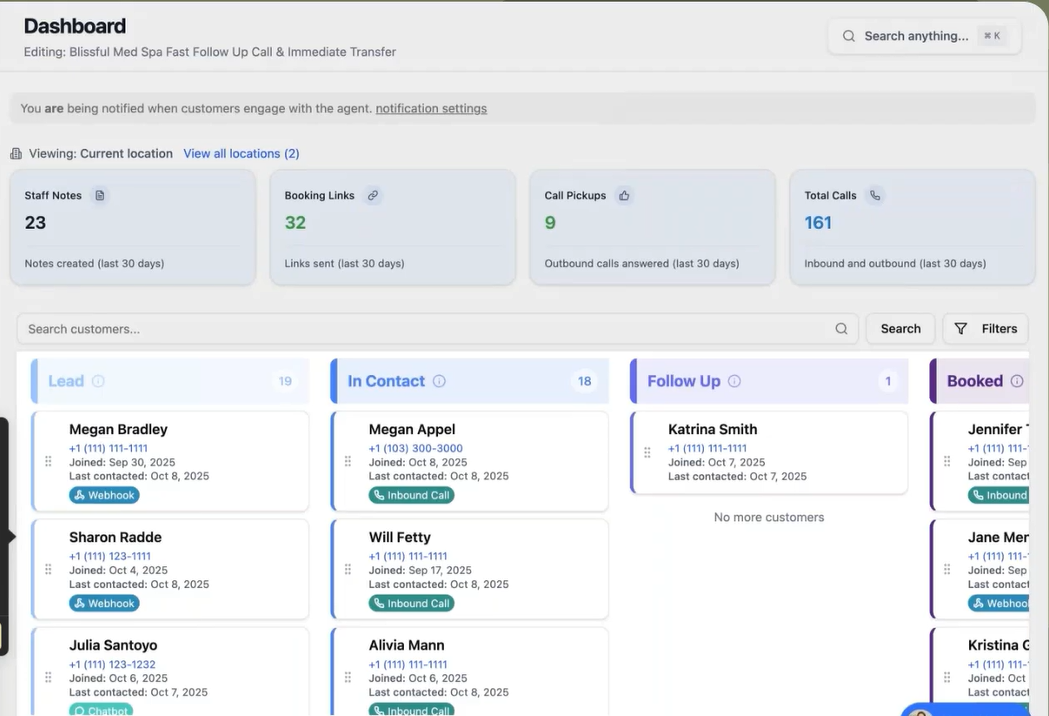
Recura AI is a healthcare-focused system designed to help medical and aesthetic practices turn patient inquiries into booked appointments. Unlike basic AI medical receptionist tools that only answer calls, Recura operates across calls, texts, and web chat to respond quickly and engage patients.
It also qualifies leads and books appointments directly into a clinic’s scheduling system. The system is built to improve speed-to-lead, manage after-hours inquiries, and recover missed opportunities so clinics don’t lose patients due to delays.
What makes Recura different is that it acts like a 24/7 AI sales and scheduling assistant. It automatically follows up with leads, re-engages past patients, and continues conversations until they convert, helping clinics increase bookings without needing extra staff.
Sully.ai is an all-in-one healthcare AI platform that offers a suite of “AI medical employees,” including a receptionist, scribe, and triage nurse. It’s designed for hospitals, health systems, and larger clinics that want to automate both front-desk and clinical workflows, not just phone handling.
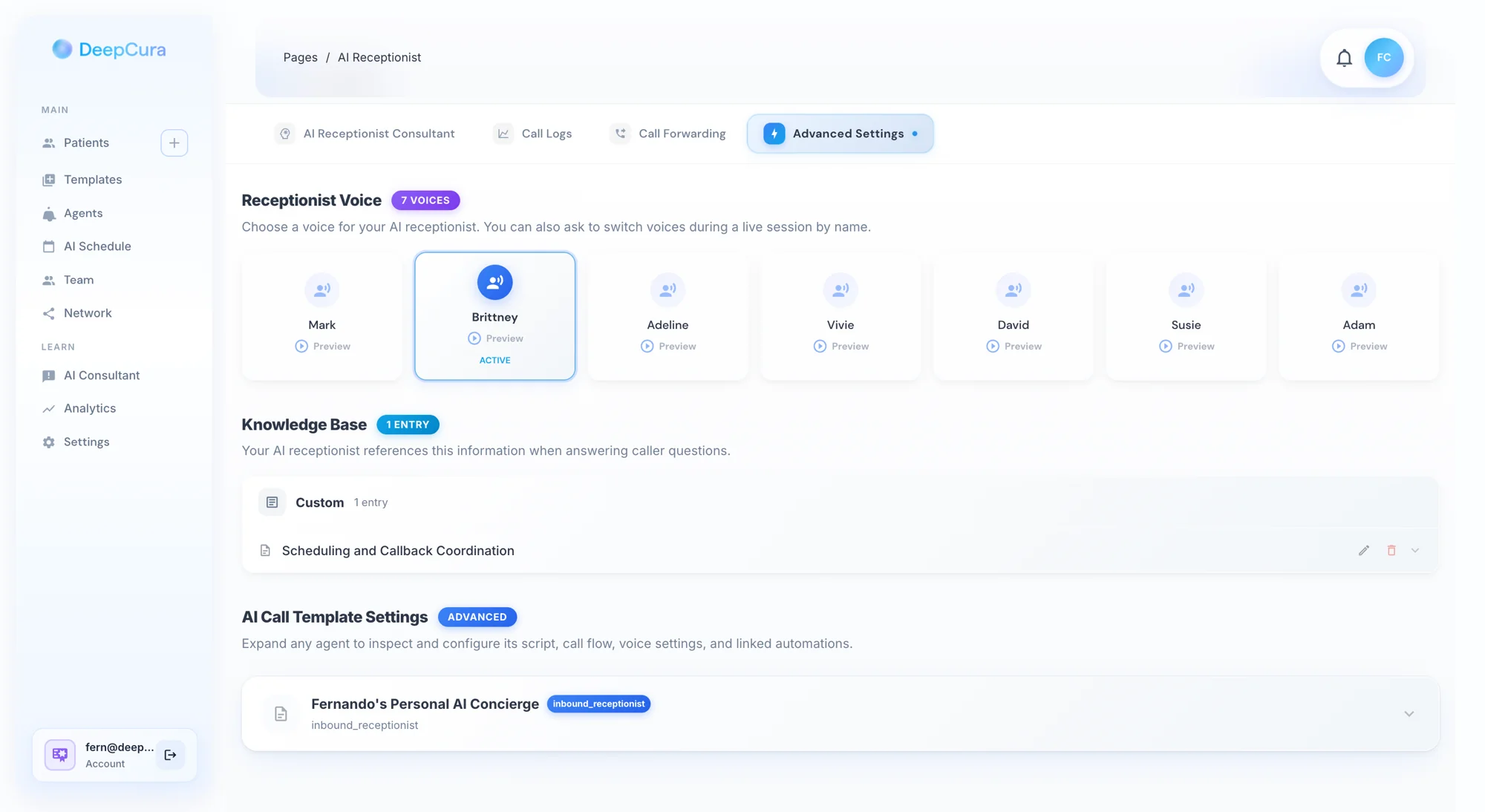
DeepCura is a clinical AI platform that includes an AI receptionist. But it is mainly designed for broader medical workflow automation like documentation, billing, and EHR management. DeepCura is mostly used by clinicians who want to reduce administrative work across the entire patient process, from intake to records to billing.
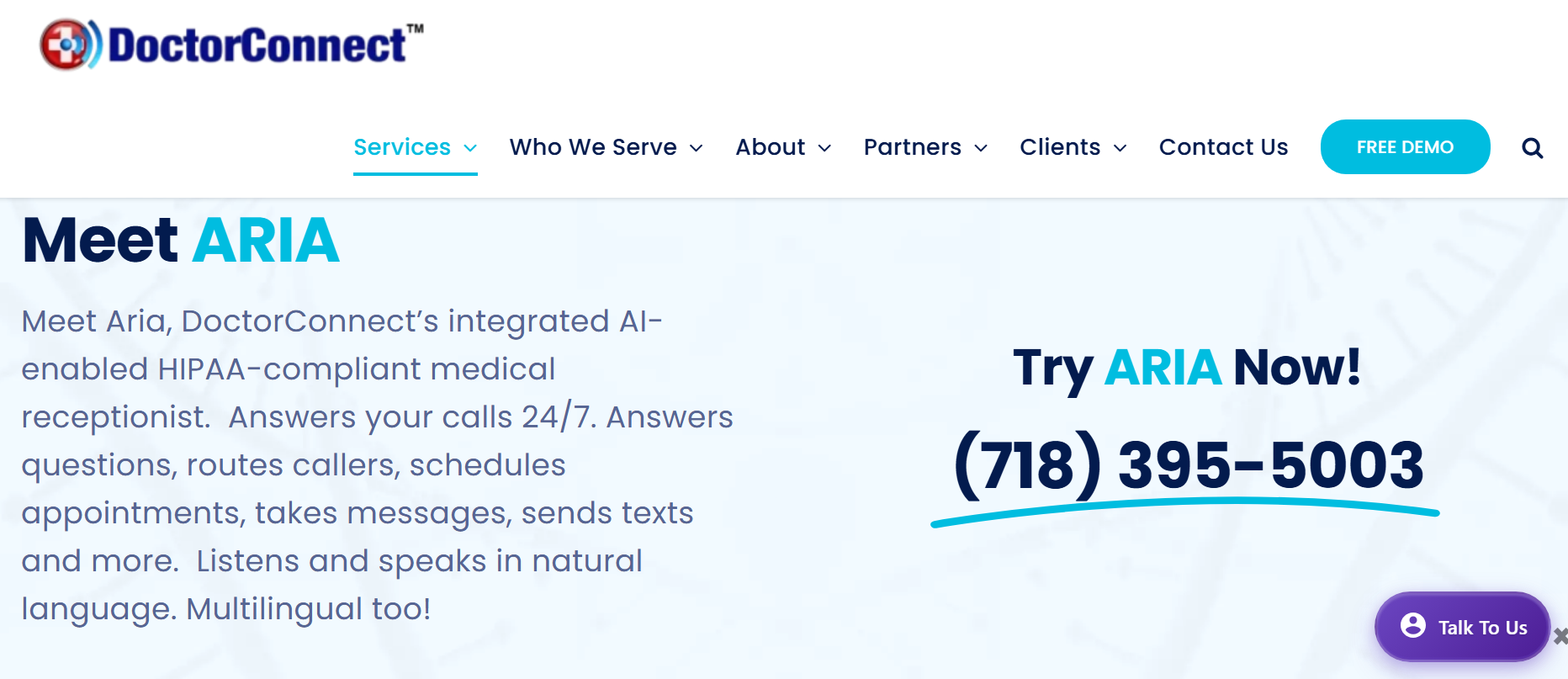
ARIA is a patient engagement and AI scheduling system designed for healthcare organizations using Epic ecosystems. It focuses on appointment coordination and patient flow management. The software answers calls 24/7, schedules and reschedules appointments directly in the calendar, and can route patients to the right department or staff when needed.
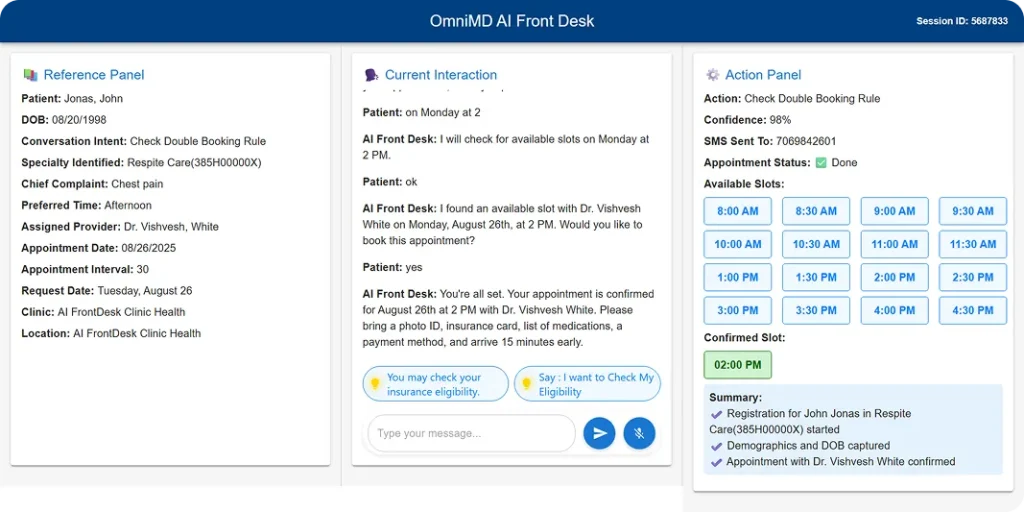
OmniMD AI Front Desk is an automation-focused clinic management system that manages important front-desk and administrative tasks like scheduling, billing, patient intake, and communication. It also automates processes such as insurance verification, check-ins, and follow-ups to reduce manual workload in clinics. The software is designed for improving overall clinic operations and revenue cycle efficiency.
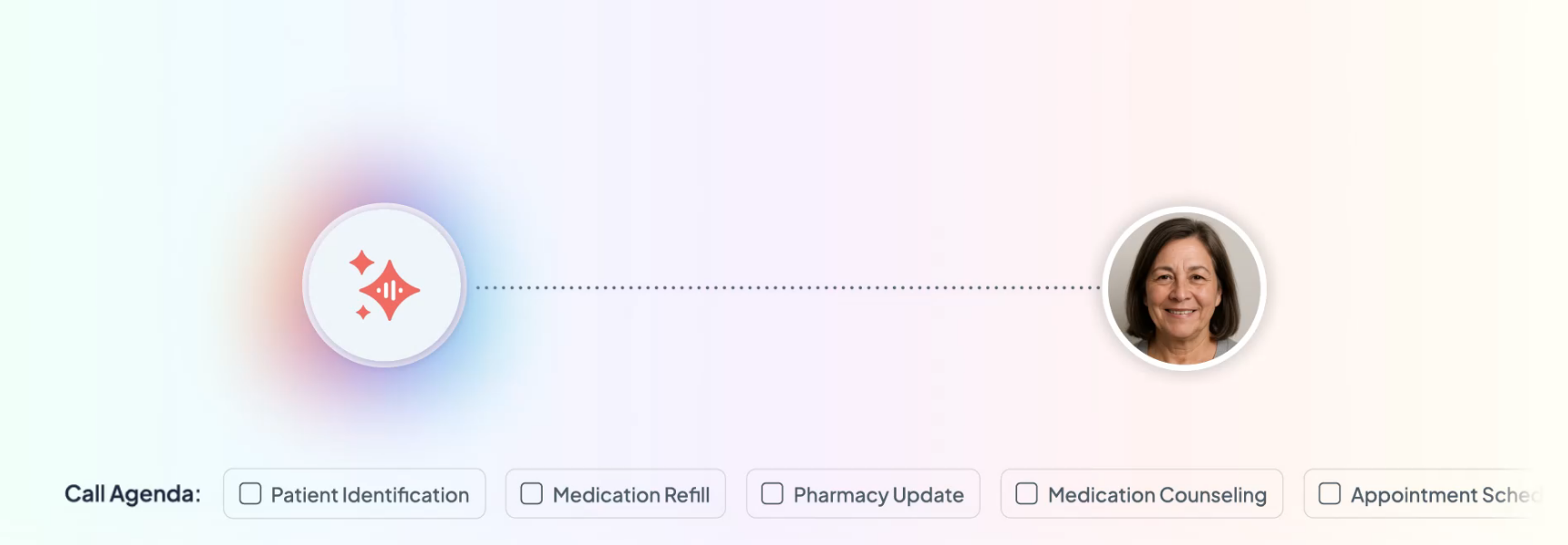
Simbie AI is a voice-first AI phone agent to manage high call volumes in medical practices. It can answer and manage patient calls 24/7 with natural conversations, understand patient intent, and book and reschedule appointments in real time. The software also supports tasks like insurance verification and prescription-related requests, helping reduce front-desk workload and missed calls.
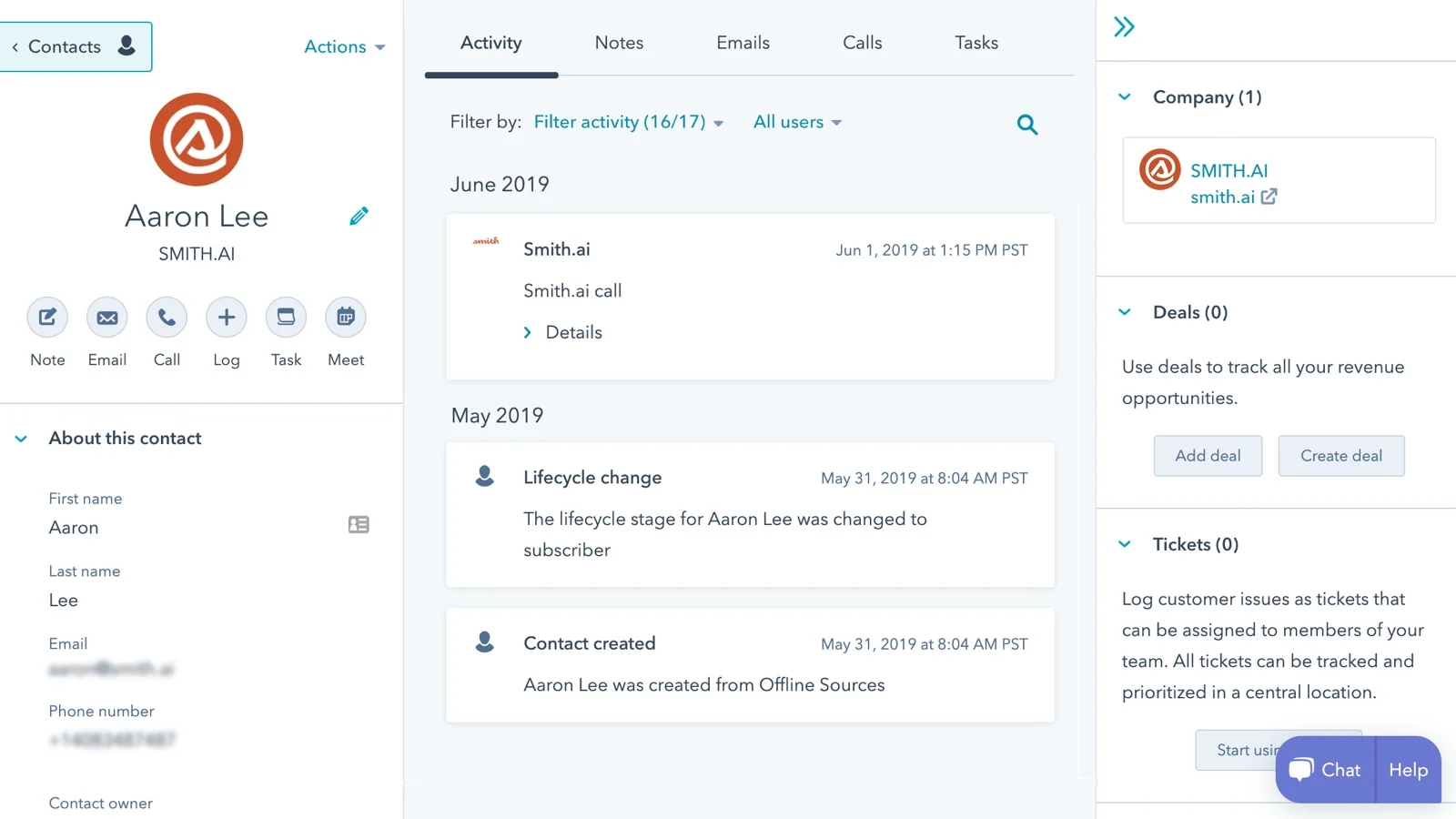
Smith.ai is a virtual receptionist service combining AI and human agents for call answering and lead capture. It operates 24/7 and can qualify leads, schedule appointments, and route calls to the right team or CRM automatically. The software also provides instant call summaries and recordings so businesses can quickly follow up with customers.
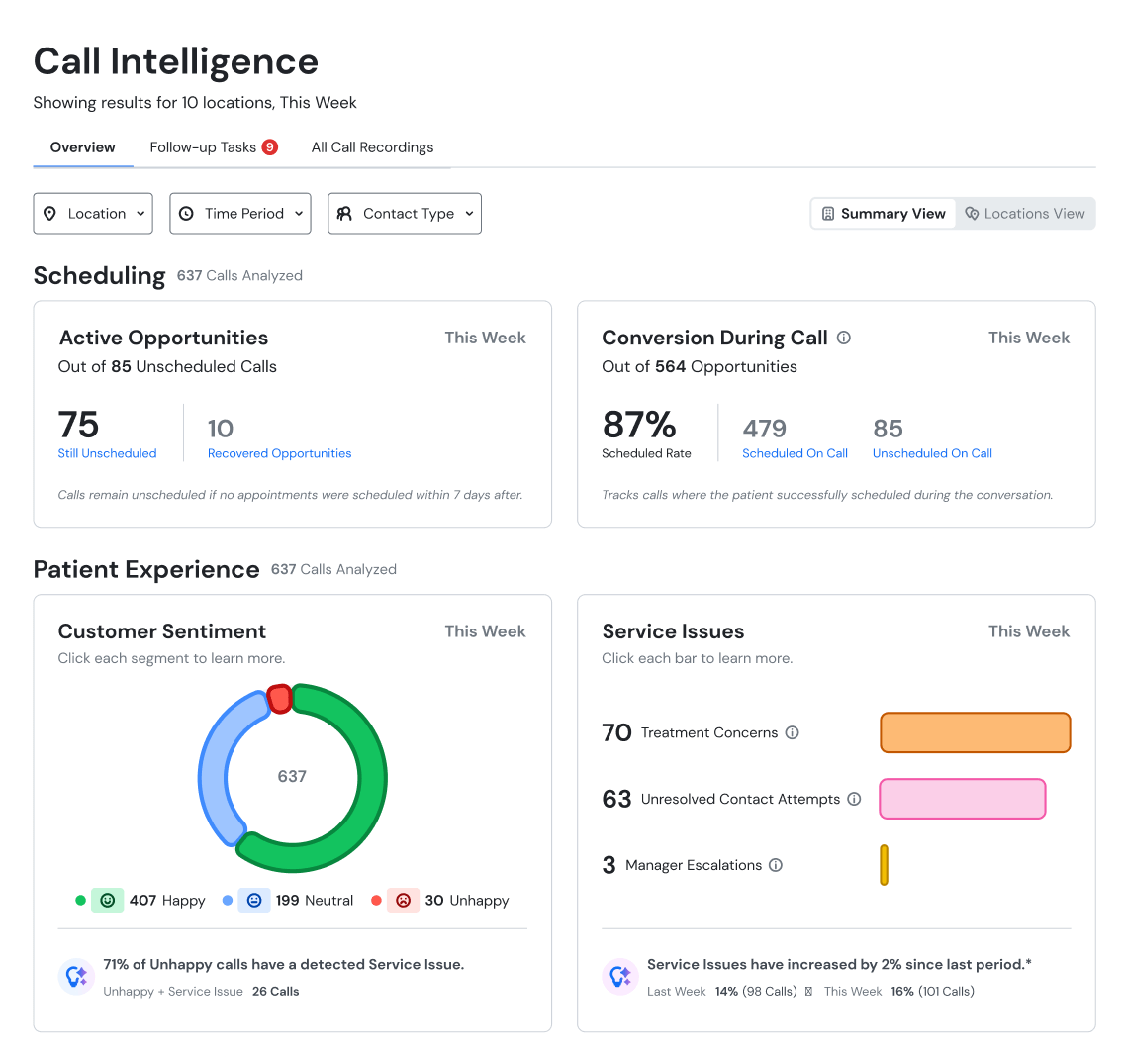
Weave is designed for improving front-desk efficiency in clinics by reducing missed calls and centralizing communication in one system. It helps practices respond faster to patients through automated workflows, which can improve scheduling and reduce no-shows. The software also includes analytics and AI features that help teams track call performance and patient engagement, and identify missed opportunities in real time.
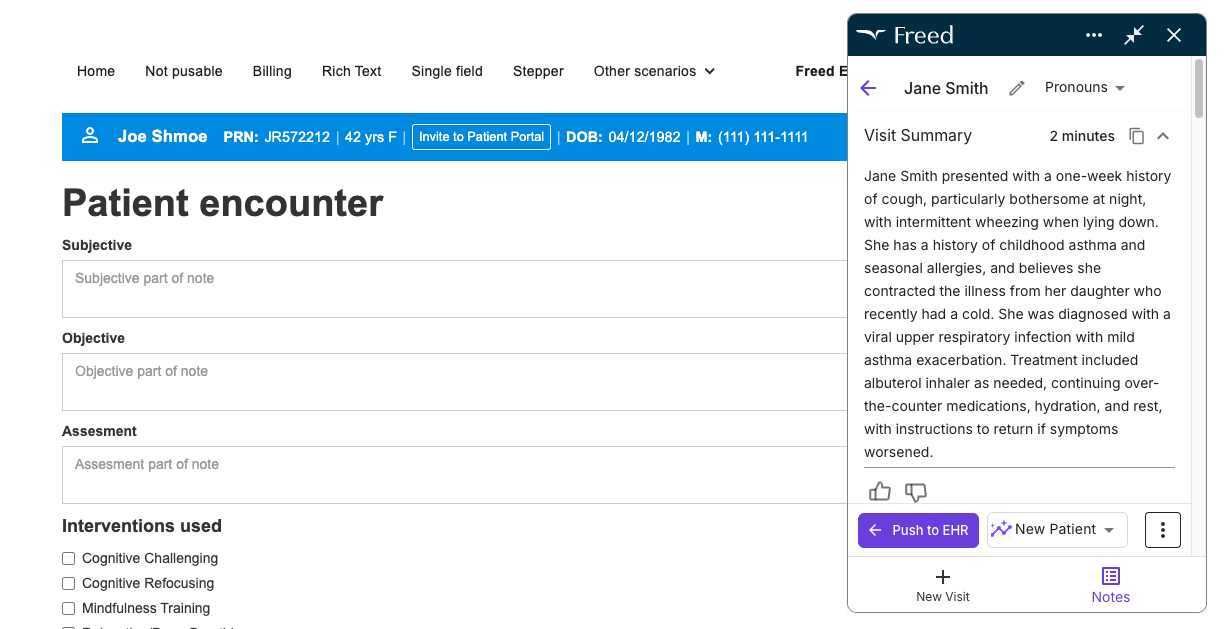
Freed AI combines documentation, intake, and basic front-desk automation in one platform. It’s mainly known for its AI clinical documentation tools, especially its AI scribe that automatically turns patient conversations into structured medical notes. The software also includes patient communication features like an AI receptionist that can answer calls 24/7, handle intake, and route requests to the right staff.
Voiceoc is an AI-powered conversational platform that automates patient communication across calls, chat, and messaging for healthcare providers. It can manage appointment booking, reminders, rescheduling, and patient queries through voice and text in real time. The software also supports tasks like prescription requests and department routing.
A tool that looks impressive in a demo can fall apart in a real practice environment. It can display the wrong EHR, clunky escalation logic, or a pricing model that quietly doubles once call volume picks up. Here's exactly what we measured and why each criterion made the list.
Choosing the wrong AI receptionist adds friction to your front desk instead of removing it. The right choice depends on your practice’s specific workflows, patient volume, tech stack, and growth stage. So, check these 7 factors before getting an AI medical receptionist.
Missed calls, slow responses, and front-desk overload are some of the biggest reasons clinics lose patients and revenue. AI medical receptionists can solve these problems by managing calls, booking appointments, and following up with patients 24/7, all while reducing staff workload.
Not every tool delivers the same results. But the best platforms go beyond basic call answering. If your goal is not just to manage calls but to grow your practice, Recura AI is the strongest option. It can capture, engage, and convert patient leads across calls, texts, and web chat, helping you book more appointments without adding staff.
Ready to stop losing patients and start maximizing every inquiry? Try Recura AI and see the difference!
An AI medical receptionist is a software that manages patient communication automatically. It can answer calls, reply to messages, book appointments, collect information, and send reminders without staff help.
The AI receptionist understands patient requests, connects to your system to take action in real time, and only passes to a human when needed. This gives you a 24/7 front desk at a much lower cost.
Yes. Recura is fully HIPAA compliant and keeps patient data secure. It also provides a Business Associate Agreement (BAA) during onboarding, which is required when managing patient information.
A human receptionist costs about $35,000–$50,000 per year, not including extra costs like benefits and training. Published market rates for AI receptionists generally run a few hundred dollars a month, which works out substantially cheaper than a salaried hire while covering hours a person cannot. The exact saving depends on which end of each range you land on, so it is worth running the arithmetic on your own numbers rather than a headline percentage. Most clinics see a return on investment within 30–60 days with an AI receptionist, especially if they recover missed bookings.
It depends on the platform, which is why checking your EHR compatibility should be the first step. Top tools connect directly with systems like Epic, Cerner, and athenahealth, allowing two-way data sync.
Some platforms offer deeper integrations with specific systems but still work with others. However, choose a tool with bidirectional integration. So, it can both read your schedule and update records automatically, without manual work.
After being acquired by PatientNow in October 2025, Recura still operates independently. It works with clinics outside PatientNow who can use Recura’s full AI features on their own systems. PatientNow users, though, get deeper integration for booking and scheduling.
A good AI receptionist doesn’t end a conversation. It passes it to a human when needed. If it can’t handle a request, it transfers the call or sends a detailed note to the right team.
Top systems also share the full conversation history, so patients don’t have to repeat themselves. The difference is simple. A weak AI stops the conversation, while strong AI supports smooth handoffs.
Setup is usually faster than expected. Timelines vary widely by scope, and the published ranges reflect that. After-hours call handling on its own can be live within days. A full build with EMR or EHR integration is where the multi-week figures come from, because the time goes on your own content and configuration rather than the software. Simple setups can be ready in minutes, while some healthcare-focused tools take about 7–10 days.
The main factor is EHR integration, as more complex systems take longer. Most vendors also offer guided onboarding, so your team doesn’t need much technical work.
An answering service just takes messages and asks someone to call back later. It adds extra steps instead of completing the task. In comparison, Recura AI manages everything.
Setup time is mostly a function of scope and of how ready your own content is, not of the vendor. A narrow start, such as after-hours only, goes live far faster than a full integration. Our readiness checklist covers what to prepare and who owns each item.
The list above compares them. The split that matters for a specialty practice is whether the system holds a clinical boundary, refusing medical questions and routing them to a person, and whether it knows your treatments rather than working from a generic script.
It responds instantly, books appointments in real time, and only involves staff when needed. The AI receptionist also follows up with new leads and re-engages old patients automatically, helping recover missed revenue and drive more bookings.

Recura answers calls, texts back leads, and books consults, so your calendar fills even overnight.
See a live call flow, tailored to your practice

Recura insights and updates, shared when there’s something worth knowing.


Proudly part of the

family